
Reviewed · OLD DUBAI, SOUKS & ABRA RIDES
Dubai Souks, Museum Guided Tour with Boat Ride and Food Tastings
Old Dubai makes the most sense at walking pace, with time to notice wind towers, shaded lanes, spice displays, and the wooden abras crossing Dubai Creek. This three-hour tour links Al Fahidi, the creek, and Deira’s souks without asking you to plan the route yourself.
I like the short abra ride, which gives you a simple but memorable view of Dubai’s old trading waterway. I also like the food tastings and Arabic coffee, since they add flavor and custom to what could otherwise be just a sightseeing walk. The main drawback is the heat: you’ll be outdoors and on foot for much of the tour, and three hours can feel rushed if you want to shop or linger.
Guides named in the experience include Hamza, Mohammad, Saif, and Francis. Their approach is conversational, with plenty of room for questions about culture, religion, customs, and Dubai’s rapid growth. The tour costs $23 per person, a fair price if you want orientation, local context, an abra crossing, and tastings in one compact outing.
Key things to know before booking
- An old-Dubai route, not a skyscraper tour: The focus is Al Seef, Al Fahidi, Dubai Creek, the Spice Souk, and the Gold Souk.
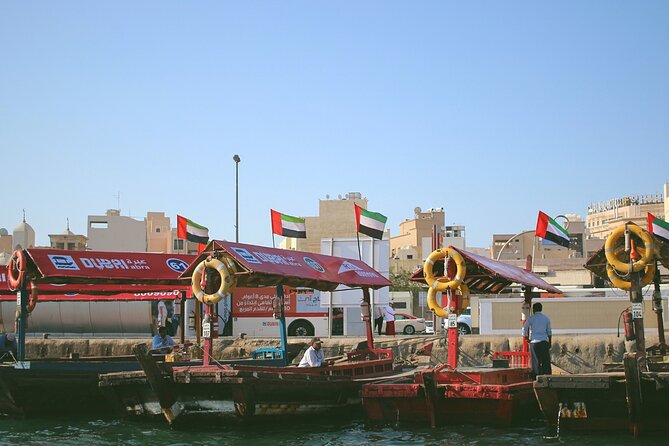
- A traditional abra crossing is included: You cross from Bur Dubai to Deira by wooden water taxi.
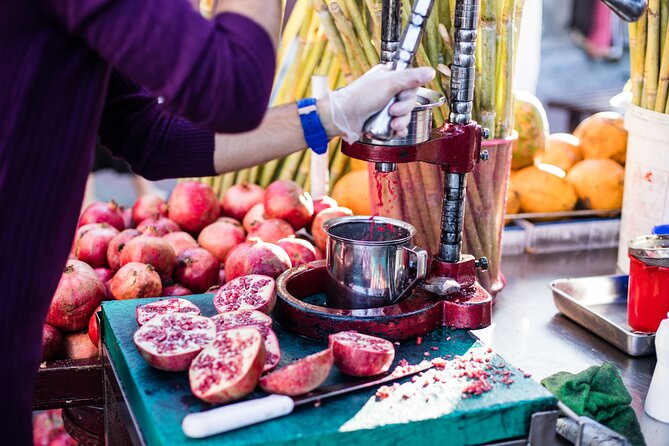
- Food is part of the tour: Expect tastings at the Spice Souk along with Arabic coffee.
- The guide makes the difference: Hamza, Mohammad, Saif, and Francis are specifically praised for humor, cultural explanations, patience, and care in the heat.
- The group is capped at 15 people: That is small enough for questions, though the exact feel depends on the day’s turnout.
- The tour ends in Deira: You finish near the Gold Souk, with the metro and taxis available for the return journey.
Why this tour is a good first look at old Dubai
Dubai is famous for polished towers, indoor malls, and grand engineering. This tour shows you the older city that existed before the skyline took over. You walk beside the creek, pass traditional homes, enter market streets, and see how trade shaped Dubai’s growth.
That change in scale is the real point. Al Seef presents an attractive version of old Arabia, while Al Fahidi gives you narrow lanes, wind towers, galleries, and cultural buildings. Across the creek, Deira feels more commercial and energetic, with spices, gold, and shopkeepers competing for your attention.
I would place this tour near the beginning of a Dubai stay. A first-time visit can otherwise feel like a collection of disconnected districts. Here, the guide explains how Bur Dubai and Deira relate to one another and why the creek mattered so much to the city’s development.
The experience is also useful for people who prefer a guide to independent research. You do not need to work out the walking route, identify the right abra station, or decide which market alleys are worth seeing. The trade-off is less freedom to set your own pace.
Other trips through the old quarter in Dubai:
- Dubai: Old Town, Creek, Museums, Souks, & Street Food Tour
★ 4.8 · 10,816 reviews - Dubai: Old Town, Souks, Street Food, Guided Tour & Abra Ride
★ 4.9 · 7,170 reviews - Dubai: Frame Tickets, Creek, Souks & Blue Mosque Guided Tour
★ 4.8 · 5,980 reviews
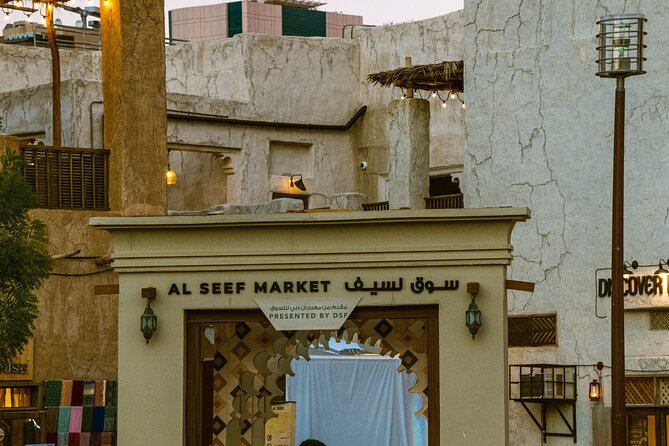
Starting at Al Seef beside Dubai Creek
The meeting point is Al Seef Heritage Hotel Dubai, at Al Seef Street in Umm Hurair 1. Al Seef is designed to recall old Arabian waterfront architecture while providing modern shops, restaurants, and visitor facilities. It is an easy opening because you begin with a clean, accessible introduction to the visual language of old Dubai.
You get about 30 minutes here. That is enough to see the waterfront setting and hear how the area connects modern Dubai with its trading past. It is not the place for a long meal or extended shopping session, so arrive ready to walk rather than treating this as a leisurely hotel district visit.
The start also gives the guide a chance to establish the broader story. Dubai’s older neighborhoods grew around the creek, fishing, pearl-related trade, and commerce. The tour uses that story to connect the stops instead of treating each one as an isolated photo opportunity.
If you choose a pickup option, check the exact arrangements when booking. The stated meeting point is the Al Seef Heritage Hotel, and one experience package included transport with an on-time, friendly driver. Do not assume every booking includes hotel transport unless your selected option says so.
Walking through Al Fahidi’s lanes and wind towers
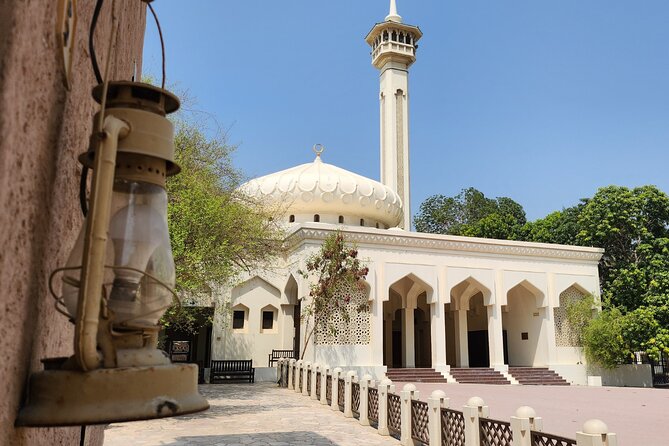
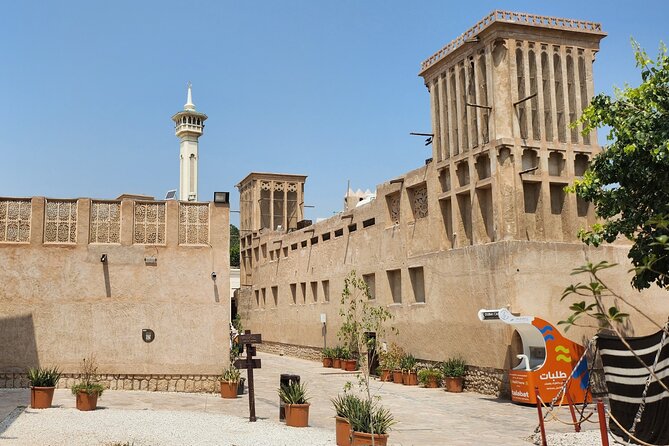
From Al Seef, the route moves into the Al Fahidi Historical Neighbourhood. This is one of the most useful sections for understanding what traditional Dubai looked like before modern construction changed the city.
The lanes are narrow, and the buildings use older forms of regional architecture. Wind towers are a key feature. They were designed to help move air through homes before modern air-conditioning, a detail that makes the neighborhood more than a pretty backdrop.
You have two listed portions in Al Fahidi, one of about 10 minutes and another of about 30 minutes. In practical terms, expect roughly 40 minutes in the area, though the timing may be divided between orientation and a more focused walk. Cultural institutions, galleries, and traditional houses appear along the way.
This is where the guide’s skill matters most. Hamza is praised for bringing history and customs to life with humor, while Saif is described as patient and open to questions. Mohammad and Francis are also noted for clear explanations and friendly conversation. The names may vary by departure, but the tour is built around a person rather than an audio recording.
The area is compact, but the lanes can be uneven or crowded at points. The tour notes that most people can participate and that walking is involved. Comfortable shoes are more useful than formal clothes, and you should expect outdoor exposure even when a few shaded spaces offer relief.
The museum stop needs a quick clarification
The tour description promises a museum visit, but the detailed stop list names the Museum of Illusions in Dubai without giving it a duration. That attraction is interactive and built around visual tricks and perception-based displays. It is a different sort of stop from a traditional museum about Dubai’s past.
The overview also refers to the Dubai Museum, which creates some uncertainty about exactly which museum experience is included. If the museum is important to you, confirm the current stop with Discover Dubai Wonders before booking. This is the one part of the route that is not described with the same precision as the souks and creek crossing.
That does not make the tour poor value, but it does affect expectations. You should not book it solely for a long museum visit. The strongest parts are the guided neighborhood walk, creek crossing, market visits, and tastings.
More eating your way round Dubai:
- Dubai Aladdin Tour: Souks, Creek, Old Dubai and Tastings
★ 5.0 · 3,755 reviews - Dubai: Authentic Old Town, Souks, Tastings & Abra Boat Tour
★ 5.0 · 845 reviews - Authentic Old Dubai, Souks, Tastings & local boat Guided Tour
★ 5.0 · 504 reviews - PRIVATE Food Tour: The 10 Tastings of Dubai With Locals
★ 4.5 · 124 reviews
Crossing the creek by abra
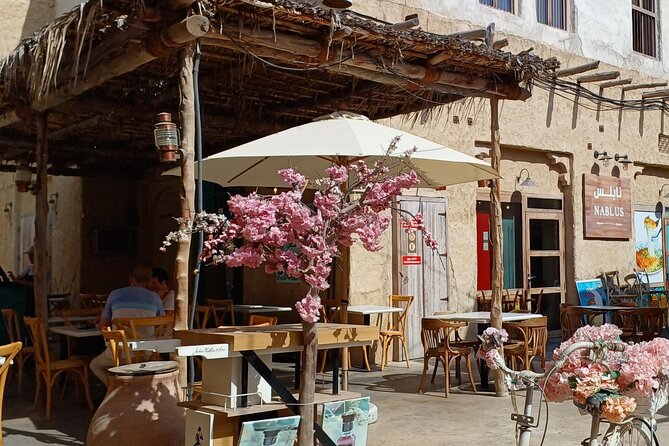
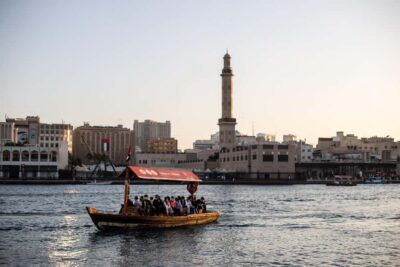
At Bur Dubai Abra Station, you board a traditional wooden abra for the crossing to Deira. The ride is short, listed at about 15 minutes including the station experience, but it changes the mood of the tour.
From the water, you see the creek as a working route rather than just a waterfront promenade. The two sides of Dubai, Bur Dubai and Deira, developed around this waterway, and the crossing makes that geography clear in a way a road transfer does not.
This is one of the best-value elements of the tour. An abra ride is simple, inexpensive, and closely tied to daily movement around the old city. It also breaks up the walking and gives you a chance to sit while the guide continues explaining the area.
The boats are open, so the weather matters. In hot, humid conditions, the ride may feel less refreshing than expected, but it remains a useful link between the two market districts. Guides have been praised for carrying water or finding cooler places when possible, though you should still bring your own water.
Tasting spices and street food in Deira
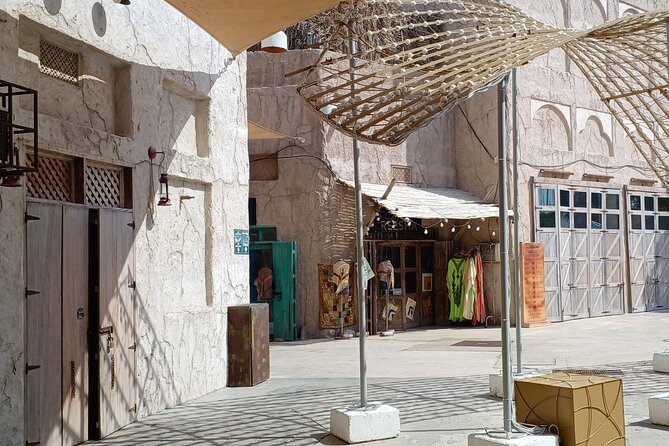
The Spice Souk receives about 40 minutes, making it one of the longer stops. You will learn about different spices, walk through local market stalls, and sample food. Arabic coffee is also part of the experience.
This section works best if you treat it as a guided introduction rather than a serious shopping expedition. The guide can explain what you are looking at and help you understand the difference between browsing and buying. The tour promises help with hassle-free shopping and good local rates, but you should still make your own decisions about purchases and prices.
The tastings add something important. Smell and taste tell you more about a place than a row of souvenir shops can. The food is described as delicious in the supplied comments, but the exact items are not specified, so do not expect a fixed tasting menu.
Arabic coffee gives the stop a cultural angle as well as a refreshment break. You can ask about customs, hospitality, and everyday traditions. Several guides are praised for answering questions about local culture and practices, which makes this a good point to ask about subjects you may not feel comfortable raising elsewhere.
The Spice Souk can be an intense place for people who dislike sales attention. A guide may make the visit easier, but the market is still a commercial space. Keep your shopping time realistic because the tour continues on a schedule.
Finishing among the Gold Souk displays
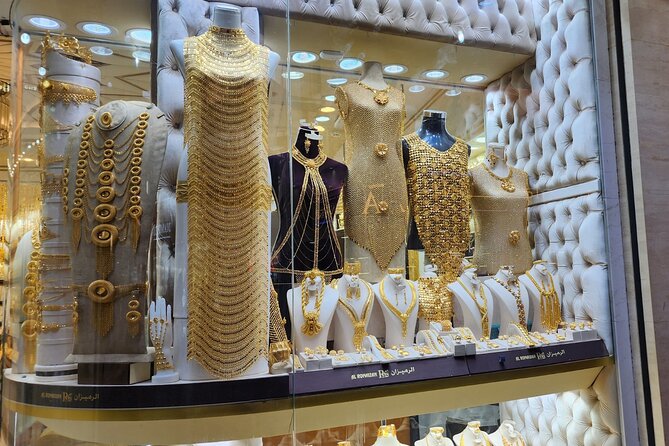
The final stop is the Gold Souk, with about 40 minutes listed. The tour ends at the Deira side of the market, near Al Ras. This gives you time to see the elaborate jewelry windows and absorb the sharp contrast with the spice stalls.
You do not need to buy anything to enjoy this stop. The Gold Souk is also a lesson in Dubai’s trading culture and its taste for display. If you do shop, remember that the value of a piece depends on weight, purity, workmanship, and the seller’s price. The guide can help you understand the setting, but you remain responsible for any purchase.
The end point is practical. You can continue exploring Deira, walk to the metro, or take a taxi. The guide can drop you at the metro station or taxi stop when the tour ends. Unlike a loop tour, this experience does not return you to Al Seef, so plan your next move before the final stop.
The guides are the heart of the experience
The strongest praise centers on the guides rather than on any single attraction. Hamza is repeatedly described as funny, attentive, and able to explain Dubai’s past and present in a lively way. Mohammad is praised for professionalism and customer care, while Saif is noted for a personal welcome, patience, and a willingness to invite questions.
Francis is described as funny and informative, though one account suggests the three-hour schedule felt too short. That is a useful warning. The route contains many stops, and a guide who encourages conversation can easily run up against the clock.
You should expect a social walking tour, not a formal lecture. The best experience will come from asking questions. Guides cover culture, politics, customs, food, and the changes that shaped the Emirates. If you want a private, slow-paced photo walk, this group format may feel too structured.
The group limit is 15 people. That is a reasonable size for a city walk, especially when the guide is willing to answer questions. It is not small enough to guarantee a personal conversation at every stop, but it is more manageable than a large coach group.
Is $23 a fair price?
At $23 per person, the value is strong if you use the tour as an introduction to several parts of old Dubai. You are paying for roughly three hours of guiding, the organized route, an abra crossing, food tastings, Arabic coffee, and orientation in the souks.
The price is less compelling if your main goal is shopping or a long museum visit. You could spend more time in the markets independently, and the museum portion is not clearly defined. The tour earns its price through context and convenience, not through a long list of major admission attractions.
A group discount may be available, and mobile tickets are offered. The experience is commonly booked about 27 days ahead, which suggests you should reserve early if your Dubai dates are fixed. Confirmation is provided at booking.
The tour requires good weather. If poor conditions cancel it, you are offered another date or a full refund. You can also cancel for a full refund up to 24 hours before the start time. Within 24 hours, no refund is provided.
Heat, clothing, and walking advice
Dubai’s heat can shape the entire experience. You will walk outdoors, wait at market areas, cross the creek in an open boat, and spend time in neighborhoods where shade is not constant. Guides have helped groups find cooler places and stay hydrated, but do not rely on that alone.
Bring water, wear comfortable walking shoes, and choose light clothing that is suitable for visiting traditional neighborhoods. The tour is not described as requiring a strict dress code, but respectful clothing is sensible around cultural sites and local markets.
Most people can participate, and the activity is near public transportation. The main practical limitation is the amount of walking combined with heat. If you have mobility concerns, ask the provider before booking, since the supplied details do not explain the route’s surfaces, seating, or step-free access.
Who should book this old-Dubai tour?
I would recommend it to first-time visitors who want a clear introduction to Dubai beyond the modern skyline. It suits you especially well if you enjoy food samples, local stories, market streets, and a guide who welcomes questions.
Families and small groups may also like the mix of walking, boat travel, visual attractions, and tastings. The Museum of Illusions reference could add variety for children, though you should confirm that this is the current museum stop.
I would think twice if you dislike heat, shopping areas, or fixed schedules. Independent explorers who want to spend an hour bargaining in one souk may find the 40-minute market visits too brief. You should also clarify the museum detail before paying if that is a deciding factor.
Should you book it?
Book this tour if you want the basic old-Dubai experience in one compact morning or afternoon: Al Seef, Al Fahidi, an abra ride, the Spice Souk, food tastings, and the Gold Souk. At $23, it is a sensible way to gain orientation and cultural context without spending much.
The best reason to choose it is the guide-led storytelling. Hamza, Mohammad, Saif, and Francis are praised for humor, patience, and clear explanations, with special care shown in hot weather. Just allow for plenty of walking, bring water, and confirm which museum is included. If those points suit your plans, this is a practical first step into Dubai’s older neighborhoods.
FAQ
How long does the Dubai souks tour last?
The tour lasts approximately three hours.
Where does the tour start?
It starts at Al Seef Heritage Hotel Dubai, Curio Collection by Hilton, on Al Seef Street in Umm Hurair 1, Dubai.
Where does the tour end?
The tour ends at the Gold Souk in Deira, near Al Ras. You can continue by metro or taxi.
Is the abra boat ride included?
Yes. The route includes a crossing from Bur Dubai Abra Station to Deira by traditional wooden abra.
Does the tour include food?
Yes. Food tastings are included at the Spice Souk, and Arabic coffee is part of the experience.
How large is the tour group?
The maximum group size is 15 people.
Is hotel pickup available?
Pickup is offered, but you should confirm the exact transport option when booking because the stated meeting point is Al Seef Heritage Hotel Dubai.
Can most people take part?
The tour states that most people can participate, but it involves walking. It is also near public transportation.
What is the cancellation policy?
You can cancel at least 24 hours before the start time for a full refund. Cancellations or changes made less than 24 hours before the start time are not accepted for a refund. If poor weather causes the tour to be canceled, you are offered another date or a full refund.
More museums in Dubai
- Dubai: Museum of the Future Admission Ticket
★ 4.3 · 21,464 reviews - From Dubai: Abu Dhabi Grand Mosque & Louvre Museum Full-Day
★ 4.8 · 6,227 reviews - Museum of the Future Tickets
★ 3.5 · 792 reviews - Museum of Illusions Entry Ticket
★ 4.3 · 778 reviews
Just added in Dubai
- Mleiha Dubai Desert Safari with Stargazing and Dinner★ 4.5 · 20 reviews
- Private Dubai Sightseeing Tour in 4×4 Vehicle★ 5.0 · 80 reviews
- From Dubai to Fujairah: Full Day Tour with Sheikh Zayed Grand Mosque★ 5.0 · 22 reviews
- Dubai Evening Desert Safari – Sharing★ 5.0 · 89 reviews
- Private Dubai City Tour: Explore the City’s Top Attractions★ 5.0 · 26 reviews
- Desert Safari Dubai 30 Mins Quad Bike, Sand Board, Camel Ride BBQ★ 5.0 · 53 reviews
- Self-drive Quad Bike with Sand Boarding and Camel Ride in Dubai★ 4.5 · 7 reviews
- Self Drive boat tour Dubai : JBR, Atlantis and Burj Al Arab★ 5.0 · 14 reviews
Old Dubai, Souks & Abra Rides, compared.
Old Town, Creek, Museums, Souks, & Street Food Tour
Read our review →
Old Town, Souks, Street Food, Guided Tour & Abra Ride
Read our review →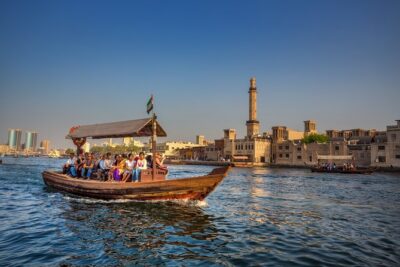
Frame Tickets, Creek, Souks & Blue Mosque Guided Tour
Read our review →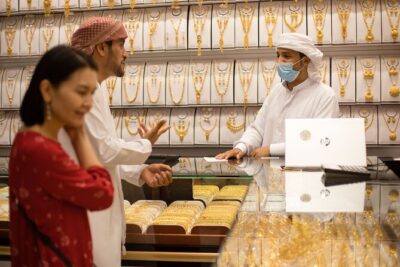
Dubai Aladdin Tour: Souks, Creek, Old Dubai and Tastings
Read our review →
Half-Day City Tour with Blue Mosque, Creek, and Souks
Read our review →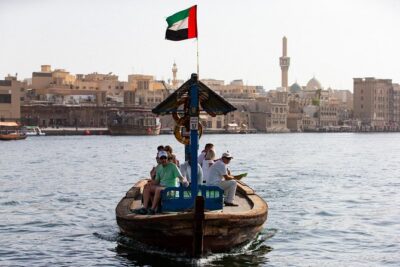
Dubai Half-Day City Tour with Visit to Dubai Gold Souk
Read our review →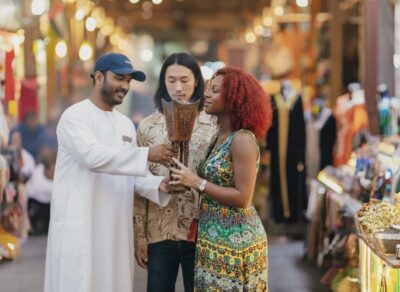
Old Town, Street Food, Creek, Souks, & Emirati House
Read our review →
Dubai City Tour: Old & New Dubai Abra Ride, Palm Island, Souks
Read our review →Browse the lists this tour appears in