
Reviewed · OLD DUBAI, SOUKS & ABRA RIDES
Dubai: Old Town, Street Food, Creek, Souks, & Emirati House
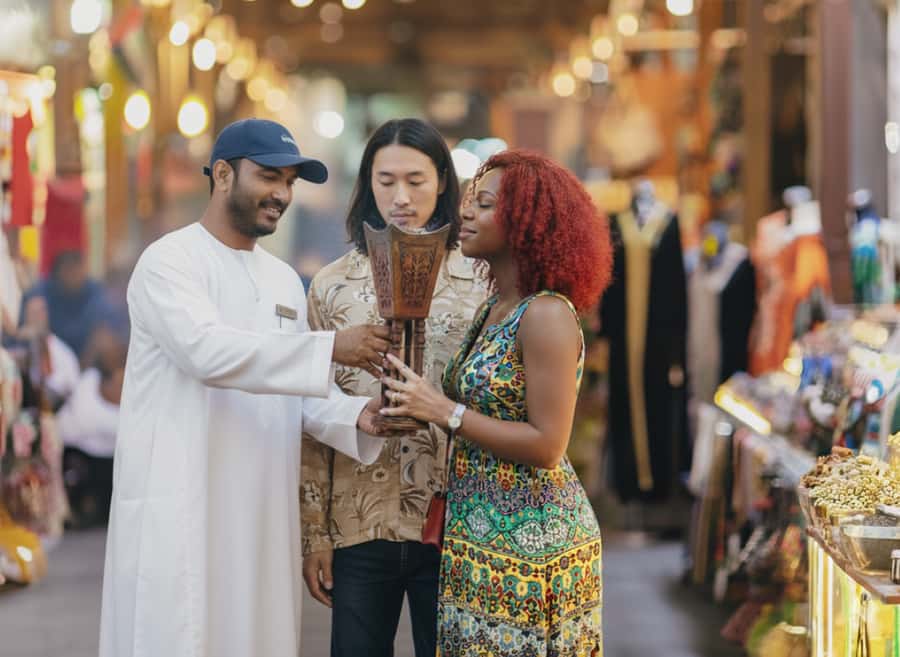
Old Dubai comes alive in small details: a cup of sweet karak tea, the creak of a wooden abra, the scent of cardamom and saffron, and shaded lanes around Al Fahidi. I like that this tour connects heritage sites with everyday food, rather than treating the old quarter as a string of photo stops. I also like the simple Creek crossing, which gives you a useful sense of how the two sides of Dubai fit together.
The price is remarkably low at $6, especially with the guide, heritage entries, boat ride, drinks, dates, chocolate, and water included. Check your booking option carefully, though, because the samosa and karak tea street-food tasting is included only when that option is selected. The three-hour walk also involves heat, uneven urban surfaces, and no wheelchair access.
Key points to know before you book
- Al Fahidi gives Dubai a human scale: Wind-tower houses, lanes, walls, and courtyards show a side of the city far removed from its modern towers.
- The abra ride is short but useful: You cross Dubai Creek in a traditional boat, then continue on foot toward the Spice and Gold Souks.
- Food is part of the lesson: Karak tea, samosas, dates, Arabic coffee, and camel milk chocolate add taste to the cultural explanations.
- Guides make the souks easier: Guides including Khan, Fesal, Ibrahim, Nasser, Mustafa, and Iqbal have been praised for clear explanations and shopping advice.
- The pace suits a first visit: You cover many sights in three hours, but the tour is a sampler rather than a detailed museum visit.
- The best value comes from the inclusions: At $6, the abra ride and refreshments alone make this a strong budget choice.
Why Old Dubai is the right place to start
Dubai is often presented through glass towers, shopping centers, and grand hotels. Those sights are real, but they do not explain how the city began. This walk takes you to the Creek, where trade, fishing, transport, and family life shaped the older settlement.
You meet at the entrance of Al Khayma Heritage Restaurant in the Al Fahidi Historical Neighborhood. From there, the route moves through several connected parts of old Bur Dubai before crossing the water to Deira.
I like this format for a first day because you are not left to piece the area together on your own. A guide can explain why the Creek mattered, point out traditional building features, and connect the old neighborhoods with the modern city you see elsewhere.
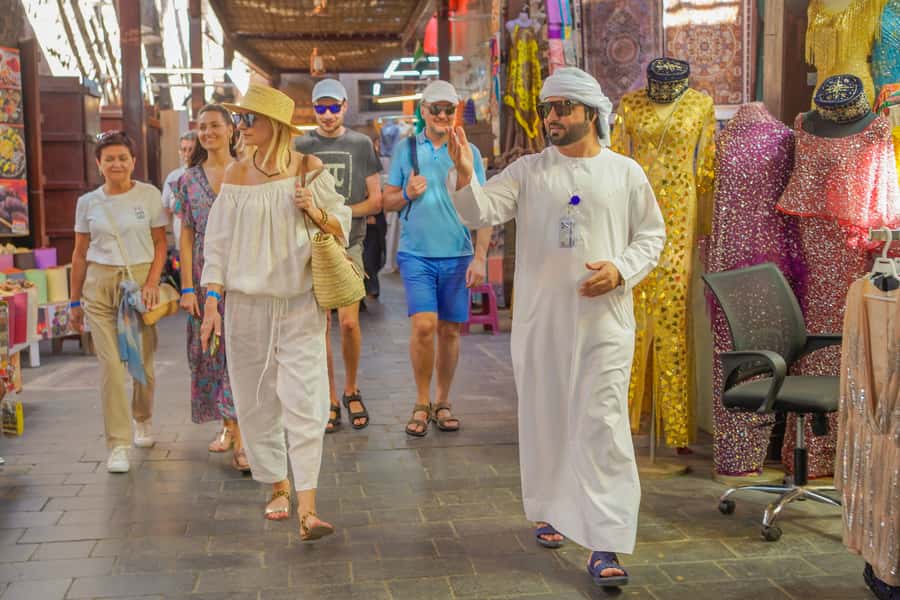
The guides are the main variable in any walking tour, but the guide team has a strong record of clear English and friendly service. Khan is praised for explaining the city’s past and helping people feel comfortable in the heat. Fesal is described as funny, well organized, and easy to understand. Ibrahim, Nasser, Mustafa, Iqbal, Ahmed, Houssam, and others are also noted for answering questions and keeping the group involved.
Languages offered include English, German, Spanish, French, and Italian. That matters here because the tour depends on stories and explanation, not just sightseeing.
Other trips through the old quarter in Dubai:
- Dubai: Old Town, Creek, Museums, Souks, & Street Food Tour
★ 4.8 · 10,816 reviews - Dubai: Old Town, Souks, Street Food, Guided Tour & Abra Ride
★ 4.9 · 7,170 reviews - Dubai: Frame Tickets, Creek, Souks & Blue Mosque Guided Tour
★ 4.8 · 5,980 reviews
Al Fahidi Fort and the first look at Dubai’s past
The visit to Al Fahidi Fort lasts about 15 minutes. It is a brief stop, but it gives you a useful opening chapter for Dubai’s story and sets the tone for the rest of the walk.
Do not expect a long museum visit. Dubai Museum is temporarily closed, so this experience does not replace a full museum tour. Instead, the fort and surrounding historic district provide context for the older city, its defenses, homes, and trade routes.
From there, you continue toward Al Seef. This promenade offers views over the Creek and a more polished setting than some of the lanes farther inland. It is a good place to get your bearings, take photographs, and see how Dubai has built a modern visitor area beside its older quarter.
The guide’s explanation is more important than the length of the stop. You may hear about the growth of Dubai, Emirati customs, and the shift from an older trading town to a global business center. Several guides are praised for making those connections easy to follow without turning the walk into a lecture.
Mosques, old walls, and shaded lanes
The mosque stop is mainly for photographs and a short explanation. You should dress respectfully, as you would anywhere near a place of worship, and listen to your guide for guidance about where to stand and what you may photograph.
The tour also pauses at the Wall of Old Dubai. This is another short stop, with time for photographs and free time. It helps you notice the physical remains of the old district instead of rushing past them on the way to the markets.
The walking sections are not long by European city-tour standards, but the heat changes how they feel. Shade stops and indoor breaks are part of the rhythm, and one guest specifically appreciated the care taken to find cooler places during a pregnancy. Still, you should wear comfortable shoes, bring sun protection, and keep water with you. A bottle is provided, but it is wise not to rely on one small bottle for an active afternoon.
This is not a tour for infants, children under five, or wheelchair users. Large bags and luggage are not allowed. Those limits are worth taking seriously because the route uses crowded market lanes and a traditional boat dock.
Bur Dubai Souk and the taste of karak tea
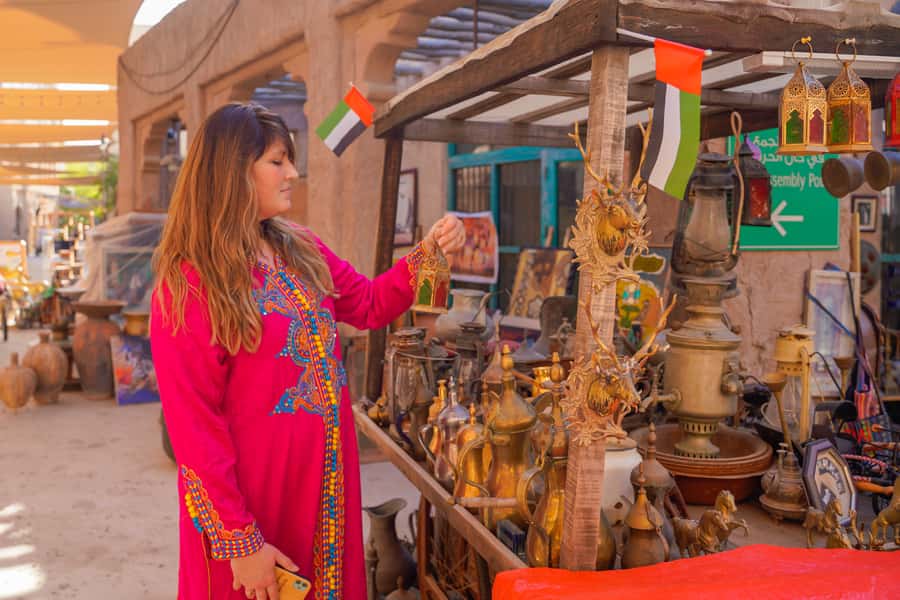
The Bur Dubai Souk section lasts about 30 minutes and combines walking, shopping, photographs, and food. This is where the experience becomes more sensory. You may see textiles, small shops, food stands, and the everyday movement of the old market area.
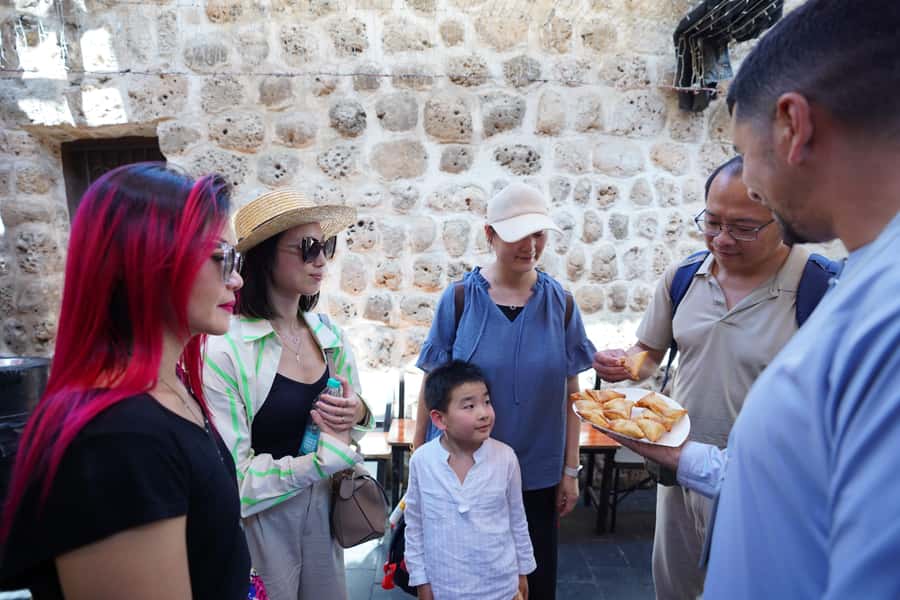
The food tasting is simple, which is part of its appeal. Karak tea is a sweet, spiced tea popular across the Gulf, while samosas offer a crisp, savory snack. The tour information also lists Arabic tea or coffee, dates, camel milk chocolate, and water among the inclusions.
Check the exact option you book. The street-food portion of karak tea and samosa is listed as included only if that option is selected. Arabic tea or coffee, dates, camel milk chocolate, and water are listed as standard inclusions.
The food does more than fill a gap between stops. It gives your guide something concrete to explain: local hospitality, the place of coffee and dates in welcoming visitors, and how familiar ingredients appear in daily life. Some routes may include extra sweets, such as doughnuts with date syrup, but those are not guaranteed and should be treated as a pleasant possibility rather than part of the promised package.
This is also a good moment to ask questions. Guides such as Ismail, Haidi, and Mustafa have been praised for fluent explanations, local cultural insight, and help with shopping. If you want to buy something later in the souks, ask your guide how to compare prices and when bargaining is appropriate.
Same base, a different sort of day:
- Dubai: Burj Khalifa Levels 124 & 125 Entry Ticket + Options
★ 4.3 · 90,891 reviews - Dubai: Desert Safari, Quad Bike, Camel Ride & Al Khayma Camp
★ 4.9 · 68,962 reviews - Dubai: Desert Safari, Quad Bike, Camel Ride and Sandboarding
★ 4.9 · 43,505 reviews - Dubai: Safari, Quad Bike, Camel Ride, and Buffet Dinner
★ 4.9 · 33,424 reviews
Crossing Dubai Creek by abra
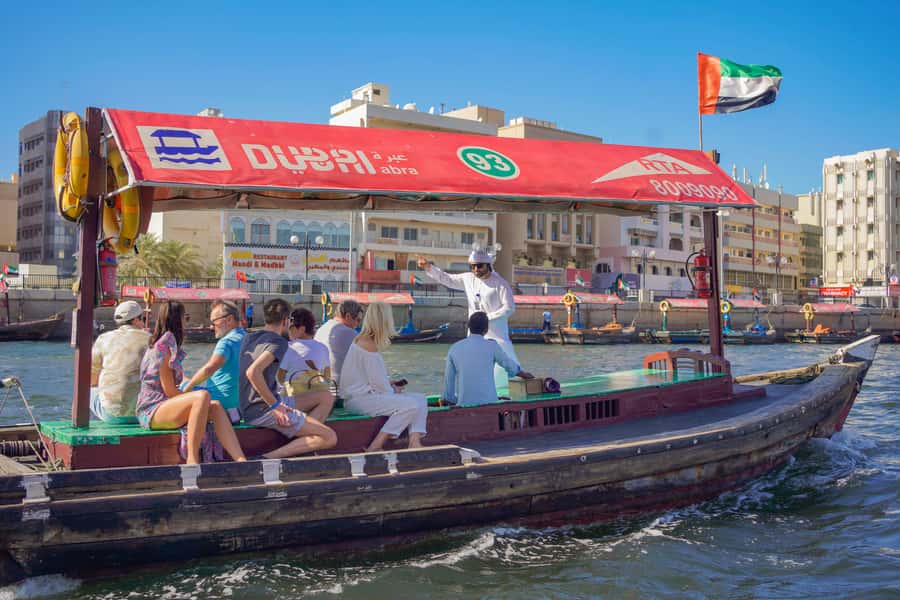
The abra ride takes about 15 minutes, including time at the Bur Dubai Abra Dock. You board a traditional wooden boat and cross Dubai Creek toward the Deira side.
This is not a long cruise with a commentary system or reserved sightseeing seats. It is local transport used as a travel experience, and that is exactly why it works. You get a quick view of the water, the docks, the buildings along the banks, and the old connection between Bur Dubai and Deira.
The boat ride also saves you from treating the Creek as an abstract line on a map. After crossing, you understand why the waterway was central to movement and trade. The ride is one of the strongest parts of the tour because it is both practical and atmospheric.
The dock can be busy, and you should follow your guide closely while boarding. Keep phones and loose items secure. The boat section is short, but it breaks up the walking and gives you a seat and a change of pace.
Spice Souk: use your senses, then your judgment
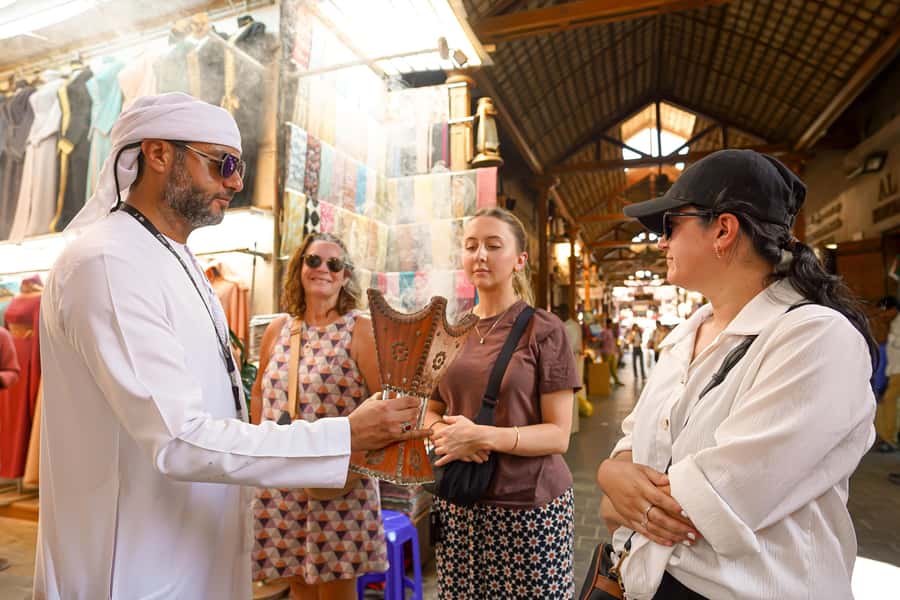
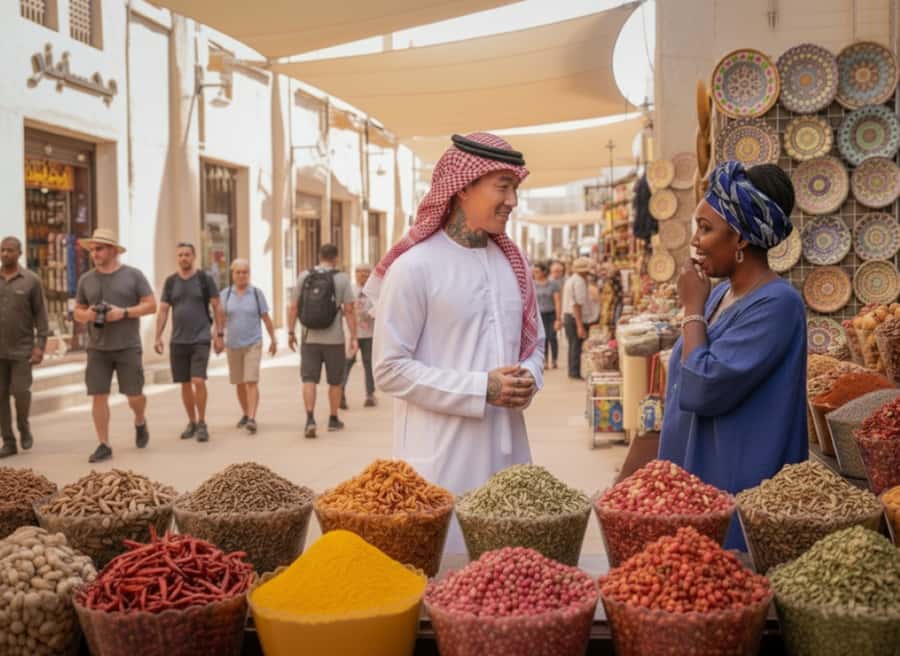
The Dubai Spice Souk receives about 30 minutes, making it one of the longer stops. This is the place to slow down, smell the spices, look closely at the displays, and ask questions before buying.
You might find sacks and jars of spices, dried goods, tea, sweets, and other market products. The exact goods and prices vary, so avoid rushing into the first shop. A guide can explain what you are seeing and help you understand the difference between browsing and making a purchase.
The market can feel crowded, especially when several groups arrive together. That is part of its character, but it can also make photography and conversation harder. Keep your belongings close and stay aware of the meeting point.
I would use this stop for small purchases rather than a major shopping mission. The tour gives you a helpful introduction, but 30 minutes is not enough for careful comparison across the entire market. If a seller makes a strong pitch, you can thank them and keep walking. Bargaining is expected in many souk settings, but you should do it politely and only when you are genuinely considering the purchase.
Gold Souk finish and what you will see
The tour ends at the Dubai Gold Souk after about 15 minutes in that area. The displays are the main attraction, with gold jewelry presented in a way that can feel far removed from ordinary high-street shopping.
You do not need to buy anything to enjoy this stop. Look at the craftsmanship, note the scale of the displays, and ask your guide about local shopping customs. If you do plan to purchase, take your time, compare shops, and understand the price before agreeing.
Ending here is practical because you are already in Deira and can continue exploring independently. You might browse nearby shops, return across the Creek, or arrange your next stop from the souk area. The tour does not return you to the starting point, so plan your onward route in advance.
The Gold Souk is also a clear example of the tour’s limits. You get a lively introduction, not an in-depth shopping consultation or a long guided visit inside every market. That is fine for most people, especially if you want to see the area and decide later where to spend more time.
What the $6 price really gives you
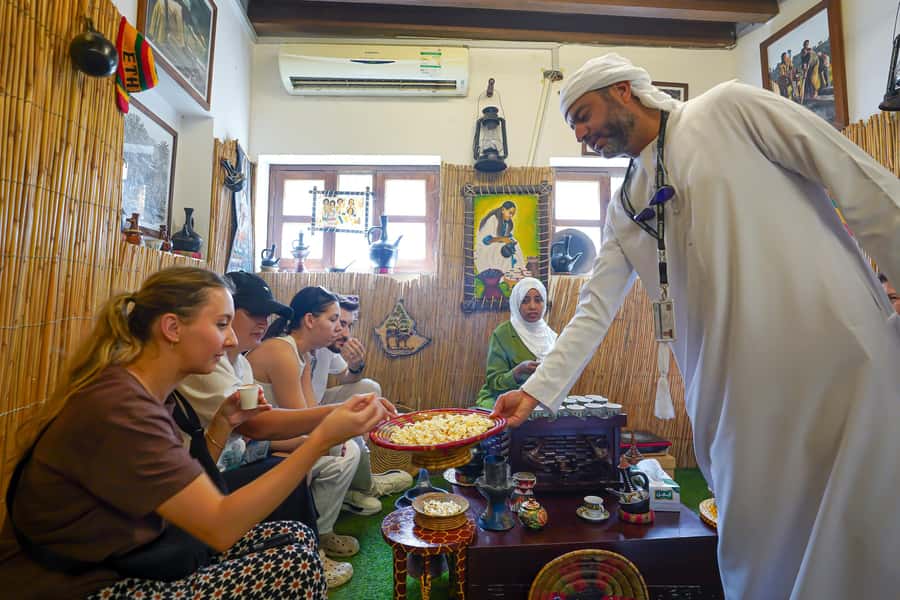
At $6 per person, this is unusually good value. You receive a live guide, entry to the listed museum and heritage sites, the abra crossing, a heritage house visit, Arabic tea or coffee, dates, camel milk chocolate, and bottled water. The street-food tasting adds karak tea and samosa when selected.
Even if you value the tour only as organized transport between the old neighborhoods, the price is modest. Add the guide’s explanations, the heritage-house hospitality, and the Creek crossing, and it becomes one of the easier budget choices in Dubai.
The low cost does mean you should keep expectations sensible. You are not booking a private tour, a luxury meal, or a detailed museum program. The schedule moves through many stops, with roughly 15 to 30 minutes at each. You will see a lot, but you will not have unlimited time at any one place.
The best value comes if you are new to Dubai and want orientation. If you already know Al Fahidi, the souks, and the Creek well, you may prefer to explore alone at a slower pace.
The Emirati heritage house and local hospitality
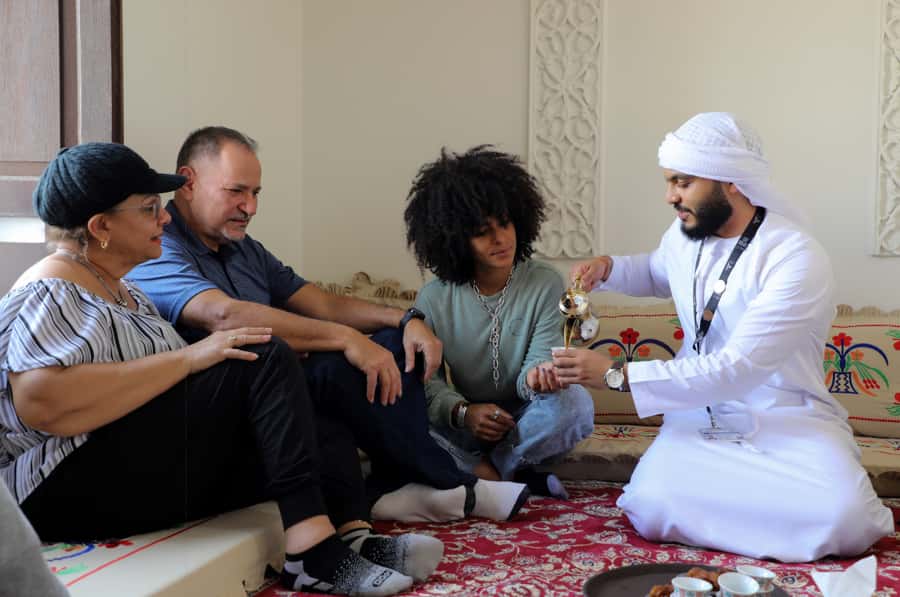
The heritage house visit is one of the most meaningful parts of the experience because it shifts the focus from streets and markets to hospitality inside a traditional setting. You are offered dates, tea, and Arabic coffee, with the guide explaining their place in Emirati life.
The stop is not simply a snack break. Hospitality is central to how the tour presents Emirati culture, and coffee and dates provide a direct, easy-to-understand example. You can ask about serving customs, ingredients, and the difference between this welcome and the sweet karak tea served elsewhere on the route.
The heritage house also helps balance the commercial energy of the souks. After looking at goods for sale, you spend time with a tradition based on welcoming people. That contrast gives the three-hour route more shape.
How to prepare for the three-hour walk
Plan for an active outing, even though the pace is manageable. Wear comfortable shoes and clothing suitable for walking in Dubai’s heat. Carry sun protection, keep valuables secure in crowded markets, and avoid bringing luggage or large bags.
The meeting point is the entrance of Al Khayma Heritage Restaurant in the Al Fahidi Historical Neighborhood. The tour finishes at the Dubai Gold Souk, not back at the restaurant.
You can cancel up to 24 hours before the start for a full refund, and the reserve-now, pay-later option lets you keep your plans flexible. Starting times vary, so check availability for your date.
The experience is not suitable for wheelchair users, infants, or children under five. If you have mobility concerns, note that the route combines walking, market lanes, dock access, and a traditional boat ride.
Who will get the most from this tour
I would recommend it to first-time visitors who want more than a skyline photograph. It is also useful if you have only a few hours in Dubai and want history, food, shopping, and a boat ride in one compact outing.
Solo visitors may appreciate having a guide for the markets and the abra crossing. The guide team is often praised for being helpful, friendly, and attentive, and several guides are happy to answer questions rather than simply recite facts.
Families with older children can also enjoy it, especially if the children like boats, sweets, and markets. The age restriction matters, though, and the walking route may be tiring in hot weather.
I would be more cautious if your main goal is an unhurried shopping trip. The group must keep moving, and the souk stops are short. I would also choose another activity if you need step-free access or a fully indoor itinerary.
Should you book it?
Book this tour if you want a low-cost introduction to Dubai’s older neighborhoods, with a real Creek crossing and enough food tasting to make the culture feel tangible. The combination of Al Fahidi, the heritage house, the abra, and the Spice and Gold Souks gives you a useful first picture of the city beyond its modern towers.
The strongest reason to book is the guide. Names such as Khan, Fesal, Ibrahim, Nasser, Mustafa, and Iqbal appear repeatedly in strong feedback for clear explanations, humor, patience, and practical help. Your experience will depend partly on who leads your group, but the format gives a good guide plenty to work with.
Skip it if you want a private, slow-paced tour or a full museum experience. For almost everyone else, $6 for three hours, refreshments, heritage access, and an abra ride is an easy value call. Just confirm the food option, prepare for walking, and arrive ready to see the Dubai that existed before the towers.
FAQ
Where does the Old Dubai tour start?
The meeting point is at the entrance of Al Khayma Heritage Restaurant in the Al Fahidi Historical Neighborhood, Dubai.
Where does the tour finish?
The tour ends at the Dubai Gold Souk after the guided visit to the Spice and Gold Souks.
How long does the experience last?
The tour lasts three hours. Starting times vary, so you need to check availability for your chosen date.
Is the abra ride included?
Yes. A traditional abra ride across Dubai Creek is included.
What food and drinks are included?
The listed inclusions are Arabic tea or coffee, dates, camel milk chocolate, and bottled water. Karak tea and samosas are included when the street-food option is selected.
Is Dubai Museum open during this tour?
Dubai Museum is temporarily closed. The tour still includes the listed heritage sites and the Al Fahidi Fort visit.
Is the tour suitable for young children or wheelchair users?
The tour is not suitable for children under five, infants, or wheelchair users. It includes walking through historic districts, souks, and a traditional boat dock.
Just added in Dubai
- 2-Day City Tour: Dubai & Abu Dhabi + Yacht Experience★ 4.8 · 17 reviews
- Abu Dhabi Tour With Ferrari World From Dubai★ 5.0 · 173 reviews
- Dubai Deep Sea Fishing 4 hours + BBQ of Catch★ 5.0 · 56 reviews
- Dhow Cruise Dubai with Buffet Dinner, Dance & Horse Show★ 5.0 · 94 reviews
- Discover Scuba Diving in Dubai★ 5.0 · 116 reviews
- Old Dubai Gold Souk and Water Taxi★ 4.0 · 26 reviews
- Ferrari World Entry Tickets from Dubai with Transfers from hotel★ 3.5 · 92 reviews
- Dubai Souks, Food & Culture Walking Tour★ 5.0 · 132 reviews
Old Dubai, Souks & Abra Rides, compared.
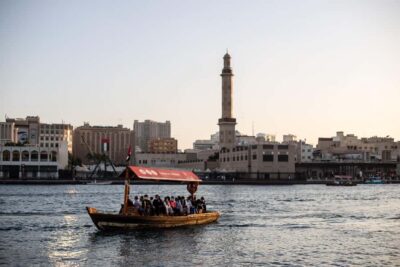
Old Town, Creek, Museums, Souks, & Street Food Tour
Read our review →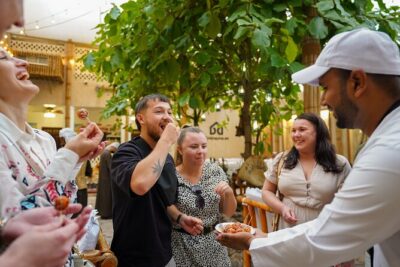
Old Town, Souks, Street Food, Guided Tour & Abra Ride
Read our review →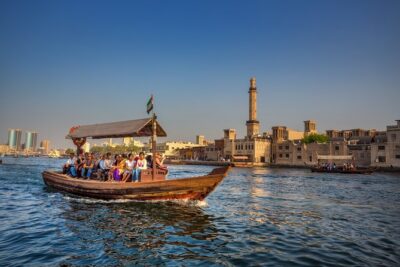
Frame Tickets, Creek, Souks & Blue Mosque Guided Tour
Read our review →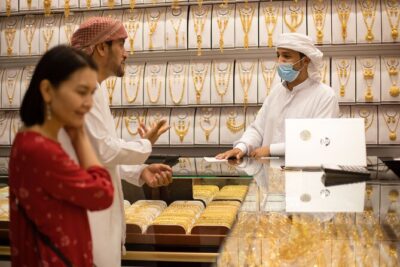
Dubai Aladdin Tour: Souks, Creek, Old Dubai and Tastings
Read our review →
Half-Day City Tour with Blue Mosque, Creek, and Souks
Read our review →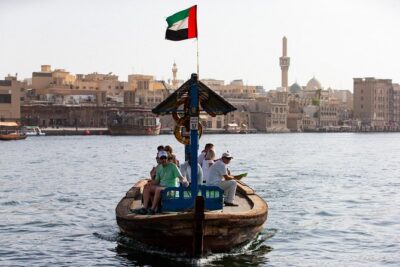
Dubai Half-Day City Tour with Visit to Dubai Gold Souk
Read our review →
Dubai City Tour: Old & New Dubai Abra Ride, Palm Island, Souks
Read our review →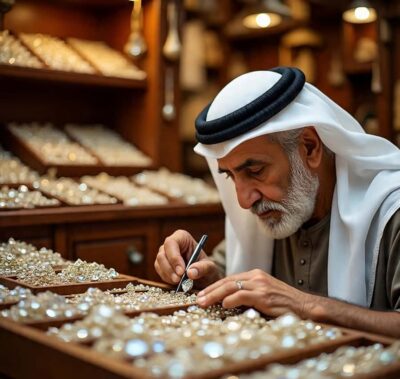
Authentic Old Town, Souks, Tastings & Abra Boat Tour
Read our review →Browse the lists this tour appears in