
Reviewed · OLD DUBAI, SOUKS & ABRA RIDES
Private Walking Tour in Dubai / Old Dubai Tour
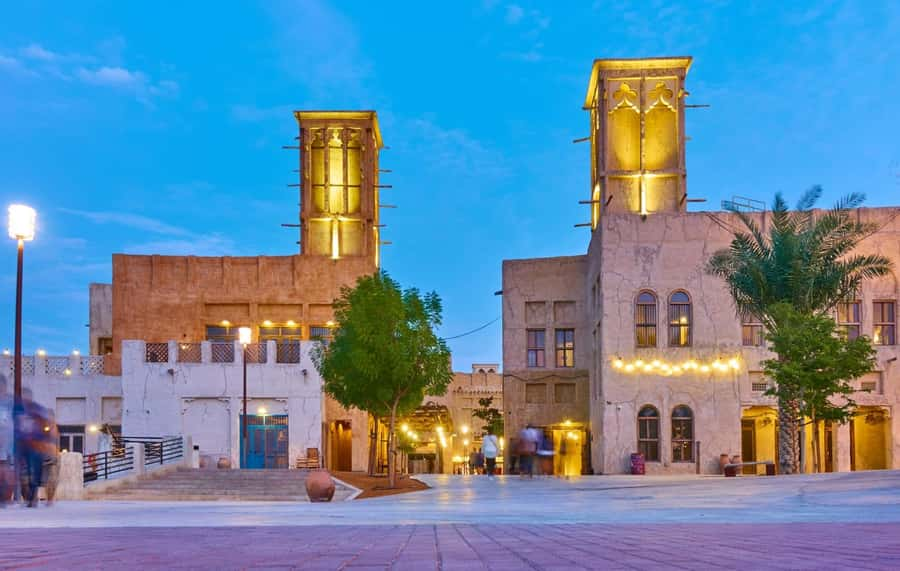
Old Dubai is best understood on foot, where wind towers, shaded lanes, working souqs, and the Creek still tell the story of a desert trading town. This three-hour tour links Al Fahidi and Bastakiya with the Spice and Gold Souks, using a short abra ride to connect the two sides of the water.
I like the mix of walking, local history, shopping, and a traditional boat trip. I also like the practical touch of bottled water and complimentary camel milk tea, both especially welcome in Dubai’s heat. Guides such as Abdullah, Adnan, and Shahzad Sheikh have been praised for clear explanations and friendly service.
The main drawback is the pace. You cover many places in three hours, so stops are brief, and the walking can feel hot. The tour is described as private but also limited to 12 participants, so confirm the group arrangement when booking if privacy is important to you.
Key points to know before you book
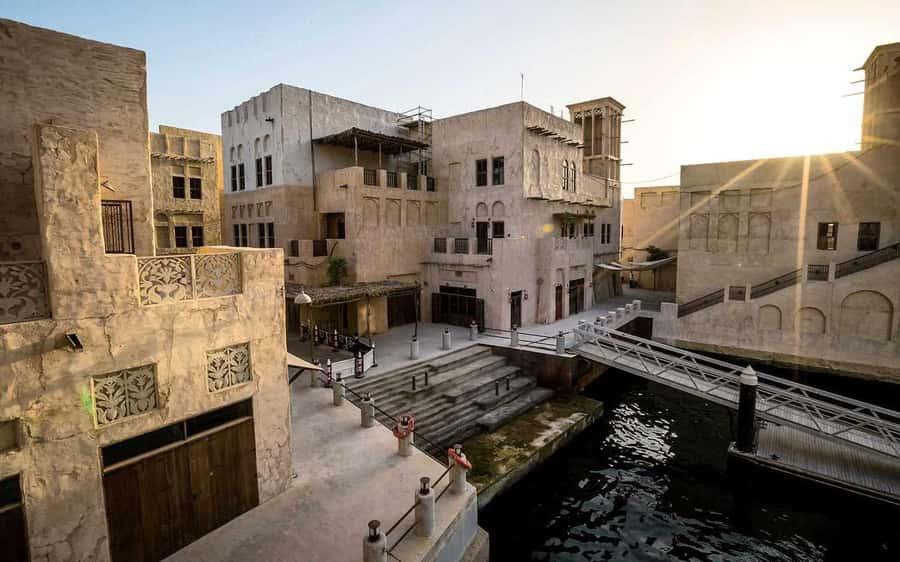
- A walk through Dubai’s older neighborhoods: See Al Fahidi, Al Seef, Bastakiya, Al Souq Al Kabeer, and the area around Al Fahidi Fort.
- A short abra crossing: Ride a traditional wooden water taxi across Dubai Creek instead of relying only on roads.
- A useful local guide: English-speaking guides such as Abdullah, Adnan, and Shahzad Sheikh explain architecture, customs, trade, and daily life.
- Two very different markets: Compare the aromas and remedies of the Spice Souk with the polished displays of the Gold Souk.
- Good value at $47 per person: The price includes guiding, the walking route, the abra ride, market visits, and complimentary camel milk tea.
- A practical finish: The tour ends at Al Ras Metro Station or a nearby taxi stand, making it easy to continue sightseeing.
Why Old Dubai makes a better first lesson than the skyscrapers
Dubai’s famous towers are easy to spot. Its earlier story is not. In the older districts, you see the compact lanes, courtyards, trading streets, and Creek-side routes that explain how the city grew before oil wealth and modern construction changed its scale.
This tour starts at Sharaf DG Metro Station, exit 4, with the guide leading you toward the older quarter. That meeting point is useful if you are using the Metro, though you should leave enough time to find the correct exit.
The tour is led in English and usually works best for someone who wants context rather than a quick photo stop. A guide can point out details you might otherwise pass without noticing, such as the shape of wind towers, the layout of old homes, and the connection between the Creek and the markets.
You are not simply being taken from one attraction to another. The route gives you a basic picture of how Dubai functioned as a trading port and how ordinary homes, religious traditions, food, and commerce fit together.
Other trips through the old quarter in Dubai:
- Dubai: Old Town, Creek, Museums, Souks, & Street Food Tour
★ 4.8 · 10,816 reviews - Dubai: Old Town, Souks, Street Food, Guided Tour & Abra Ride
★ 4.9 · 7,170 reviews - Dubai: Frame Tickets, Creek, Souks & Blue Mosque Guided Tour
★ 4.8 · 5,980 reviews
Al Fahidi and Bastakiya: Dubai before the towers
The first substantial stop is the Al Fahidi Historical Neighborhood. The area represents Dubai from roughly the mid-19th century through the 1970s, before the city’s present skyline took shape.
Expect a guided walk of about 10 minutes in Al Fahidi, followed by around 20 minutes in Bastakiya. The names are sometimes used for nearby or overlapping parts of the same old district, so the experience is less about checking off two separate attractions and more about seeing the character of historic Dubai.
The old houses are the main attraction. Their courtyards and wind towers show how buildings were designed for shade and air movement in a hot climate. You will also see narrow lanes that feel very different from the broad roads and glass buildings elsewhere in Dubai.
This is where a good guide matters most. Abdullah, Adnan, and Shahzad Sheikh have each been singled out for explaining the past clearly and answering questions. The personal format also means you can ask about architecture, local customs, or the changes between old and modern Dubai.
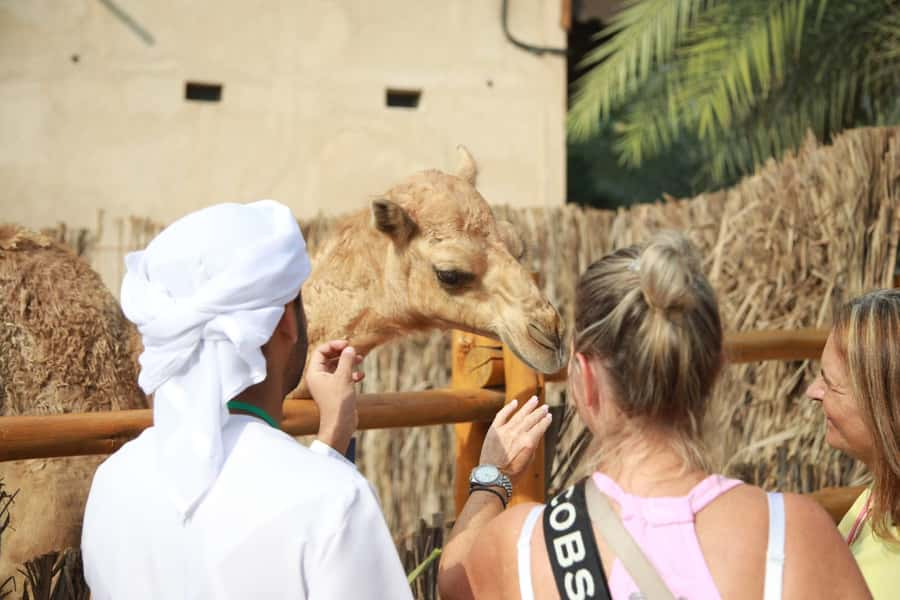
The route includes a camel and tent house, giving you another look at older desert life. It is a small stop, but it helps connect the city’s trading past with the Bedouin traditions often presented in Dubai’s cultural story.
Al Seef and Al Souq Al Kabeer: old style with a modern edge
Al Seef comes next, with about 20 minutes for a guided visit and photos. This area presents an old-Dubai look along the Creek, but it is not the same as walking through an untouched historic quarter. Parts of it are designed as a heritage-style district with shops and places to eat.
That distinction is useful to understand. Al Seef is attractive and easy to photograph, but Al Fahidi and Bastakiya provide more of the older residential character. I would treat Al Seef as a bridge between Dubai’s past and its polished present.
Al Souq Al Kabeer follows, with about 15 minutes for a guided visit. The stop adds a market atmosphere to the route and gives you a chance to see how commercial streets still shape this part of Bur Dubai.
Because the full tour lasts only three hours, these stops are fairly compact. You will have time to look, listen, and take pictures, but not necessarily to browse every shop at length. If you like shopping slowly, plan to return after the tour.
Al Fahidi Fort and Dubai Museum area
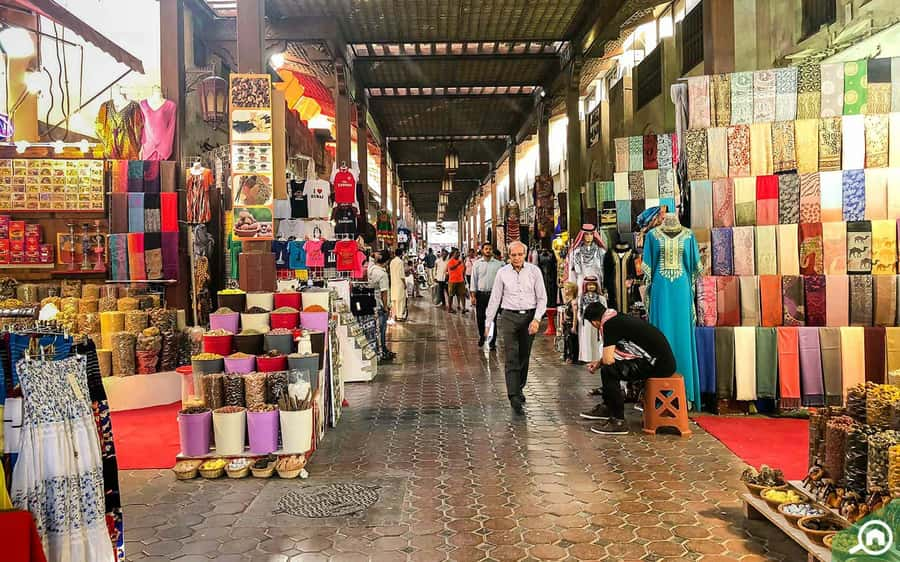
The tour passes Al Fahidi Fort, with a brief guided explanation and photo opportunity. The fort is an important landmark for understanding Dubai’s early defenses and government center.
The supplied schedule describes the Dubai Museum as part of the area, but the tour itself lists the fort and museum as a pass-by stop rather than a full museum visit. Do not book this experience expecting a long indoor museum session. Its strength is the guide’s explanation of the site and its place in the older city.
This brief stop works well in a walking tour because it keeps the route moving. You get historical context without spending most of the morning inside one attraction. If the museum is a major priority for you, check its current opening status and allow separate time for it.
Other guided walks in Dubai:
- Historic Old Dubai & Souk Small Group Walking Tour
★ 5.0 · 156 reviews - Dubai Souks, Food & Culture Walking Tour
★ 5.0 · 132 reviews - Private Old Dubai Walking Tour: Forts, Souks, and Boats
★ 5.0 · 116 reviews - Dubai: Private Old Town, Heritage & Souks Walking Tour
★ 4.9 · 102 reviews
Crossing Dubai Creek by abra
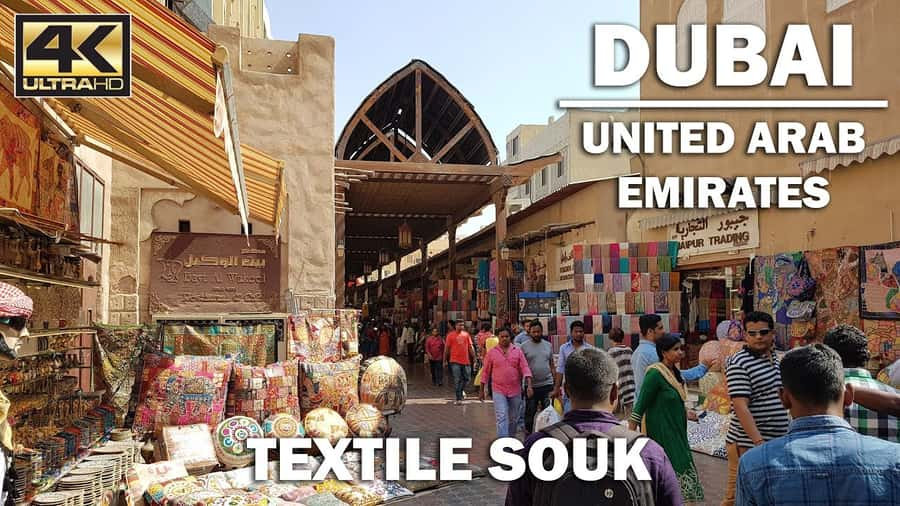
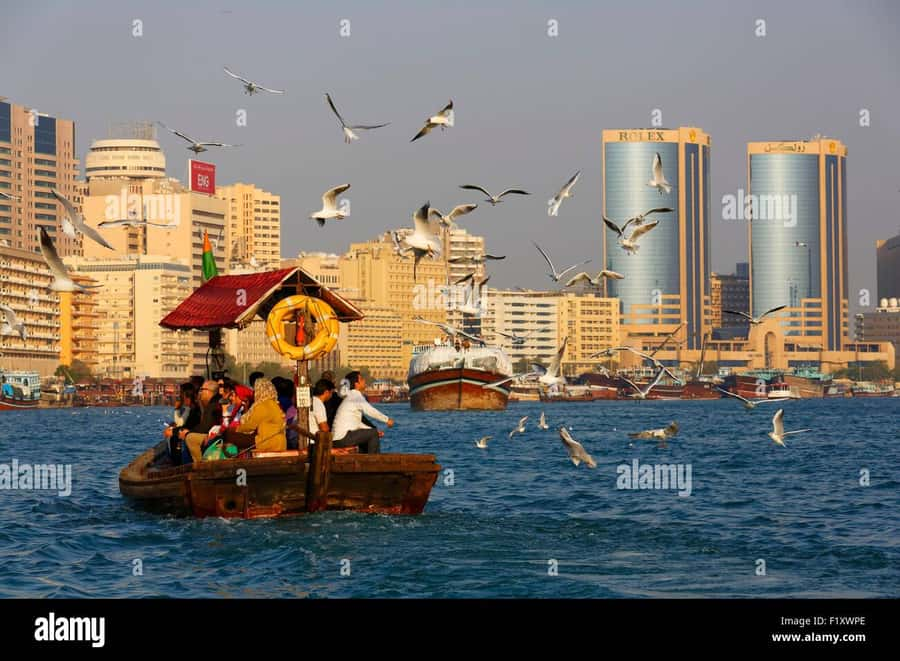
At Bur Dubai Abra Dock, the group pauses before taking a traditional abra, Dubai’s small wooden water taxi. The crossing lasts about 15 minutes and is one of the most memorable parts of the route.
The boat ride changes your view of the city. From the water, the older neighborhoods, docks, and market areas make more sense as parts of one trading district. You also get a break from walking, which matters in Dubai’s heat.
This is not a long cruise or a sightseeing boat with a formal onboard presentation. It is a short working-style crossing used to reach the Deira side of the Creek. That makes it feel more connected to daily movement through the city than a dedicated tourist cruise.
If you are sensitive to heat, bring water, wear light clothing, and use sun protection. One guide, Adnan, brought bottles of water for the group, and Abdullah was also praised for keeping people hydrated, but I would still carry your own bottle.
Spice Souk: smells, remedies, and market talk
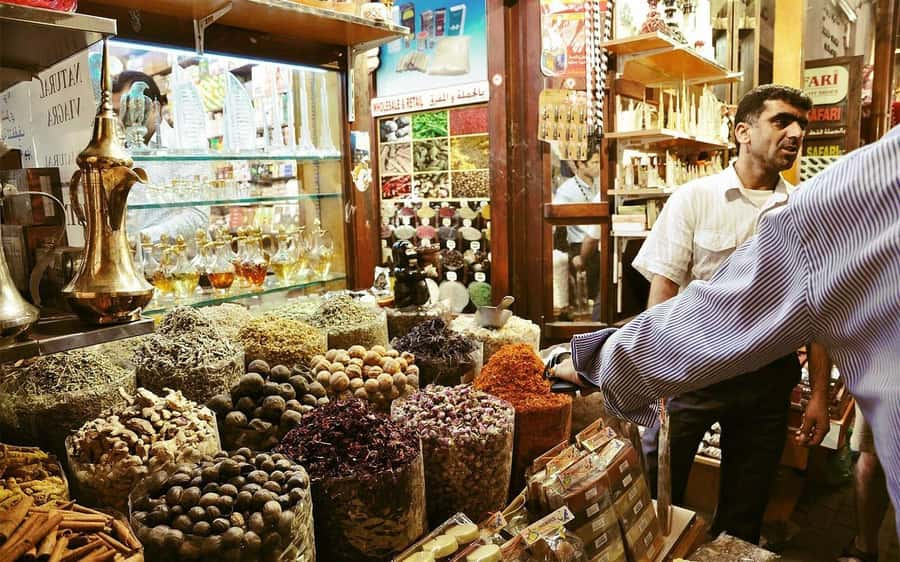
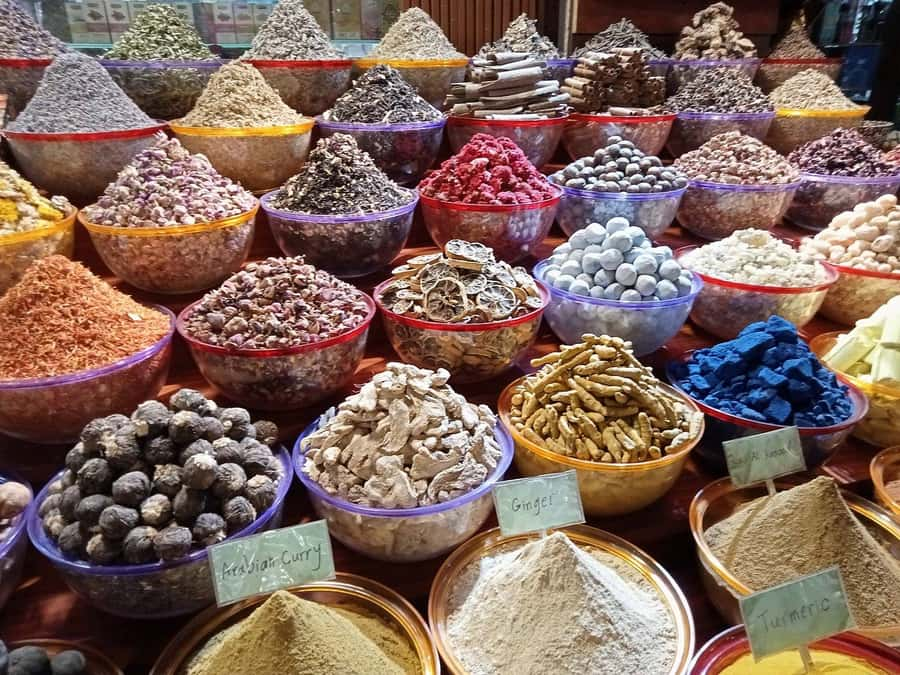
The Spice Souk receives about 30 minutes, including a guided visit, shopping time, and sightseeing. Here you can expect displays of spices and other market goods, along with an explanation of how spices were used in earlier times, including their role as traditional medicines.
The value of this stop is not only the shopping. A guide can explain what you are looking at and help you understand why spices mattered to older trading communities. You also receive information about camel milk tea and a complimentary taste, adding a small food element to the tour.
The market is a place for browsing rather than rushing to buy. Prices and products can vary, so take your time and ask questions before purchasing. The guide can help with general explanations, but you should make your own decisions about what to buy.
This is also a good place to connect Dubai with wider trade routes. Spices, dates, sweets, and other goods helped make the Creek a commercial center long before the city became known for luxury malls and high-rise buildings.
Gold Souk: a polished finish to the old-market route
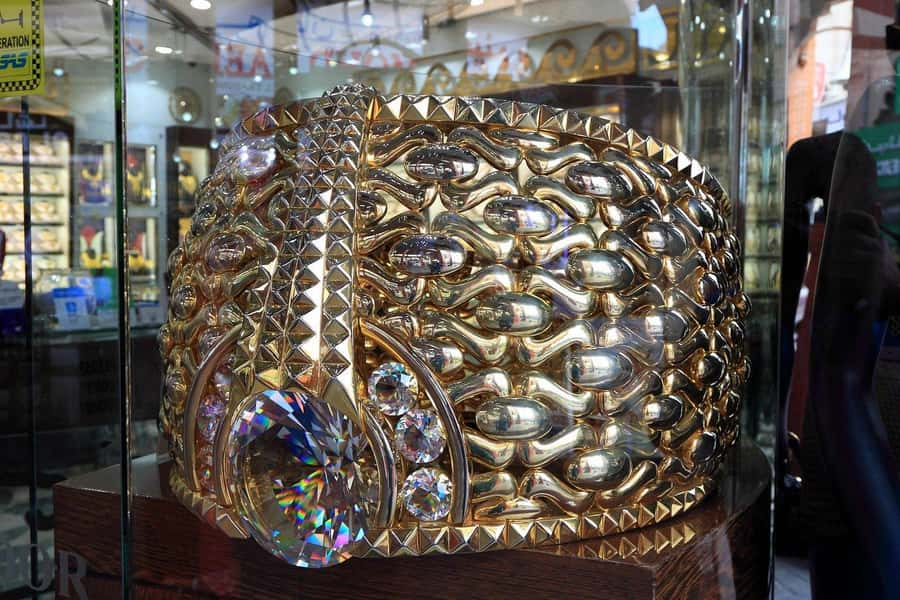
The final main stop is the Dubai Gold Souk, with about 30 minutes for a guided visit, free time, photos, and shopping. The scene is very different from the Spice Souk. Instead of sacks, jars, and strong aromas, you see carefully arranged gold jewelry behind shop windows.
The tour highlights the enormous gold ring displayed in the market, described as the biggest gold ring in the world. Whether or not you plan to buy anything, the displays make this a good place to see Dubai’s modern relationship with luxury and commerce.
You are not required to shop. The free time lets you look around, take pictures, and continue asking questions. If you do consider a purchase, remember that this is a market visit, not a jewelry-buying service. Compare items, ask about prices, and avoid feeling pressured by the short schedule.
Ending here gives the tour a clear arc. You begin with homes and forts, cross the Creek as earlier traders did, then finish in markets that still carry the old commercial purpose in a more modern form.
What $47 buys you in three hours
At $47 per person, this tour offers fair value if you want a guide to connect several Old Dubai sights in one outing. The price includes the private or small-group walking experience, an English-speaking local guide, the abra ride, market visits, and complimentary camel milk tea.
You are paying mainly for interpretation and organization. Many of these districts can be visited independently, but a first-time visitor may not know what the old houses, wind towers, forts, and market goods mean. A good guide also helps you move between Bur Dubai and Deira without wasting time.
The value is strongest for a first visit, a short Dubai stopover, or anyone who wants an introduction to local culture before exploring alone. It is less useful if you already know Old Dubai well or prefer to spend an entire afternoon shopping in one souk.
The tour has received a rating of 5 from 25 reviews, with repeated praise for the guides’ friendly manner, clear explanations, punctuality, and willingness to answer questions. Several people specifically praised Abdullah, while Adnan was noted for professionalism, kindness, and attention to comfort. Shahzad Sheikh was also praised for being accommodating.
These comments point to the most important variable: the guide. The route is worthwhile, but the explanations turn a pleasant walk into a useful lesson. The experience is also described as limited to 12 participants, so it should feel more manageable than a large coach tour, though you should confirm whether your booking is fully private or part of a small group.
Who should book this Old Dubai walk?
I would recommend it to first-time visitors who want to understand Dubai beyond the skyscrapers. It suits couples, families, solo visitors, and small groups that prefer conversation and questions over a fixed audio guide.
It is also a good choice if you are staying near a Metro line. The meeting point is outside Sharaf DG Metro Station, exit 4, and the finish near Al Ras Metro Station makes the route practical for continuing around Deira.
You should be comfortable walking for three hours, with several stops in open-air areas. Wheelchair access is listed, but the route includes walking through historic neighborhoods, souks, docks, and a traditional boat transfer. If you have specific mobility needs, confirm the route details before booking.
This is not the best fit if you want luxury transport, a long indoor museum visit, or a relaxed half-day with lots of shopping time. It is a compact introduction, not an all-day cultural program.
Useful planning advice for the three-hour route
Wear comfortable shoes. The route includes repeated walks of 10 to 30 minutes through historic streets and market areas, and the heat can make a short walk feel longer.
Bring water even if the guide provides some. The tour is outdoors for much of its length, and one of the most practical compliments directed toward the guides was their care with hydration.
Keep your schedule flexible after the final stop. The planned finish is at Al Ras Metro Station or a taxi stand, depending on your choice. That makes it easy to continue to another part of Dubai, but you should not book a tight appointment immediately afterward in case the walking pace or market visit takes longer than expected.
The activity offers free cancellation up to 24 hours before the start and allows you to reserve now and pay later. Those terms are useful if your Dubai plans may shift.
Should you book it?
Book this tour if you want a clear, friendly introduction to Old Dubai’s homes, Creek, souqs, and trading past in one compact outing. At $47, it is a sensible choice for a first visit, especially when the price includes a local guide, abra ride, and camel milk tea.
Skip it if you already know Al Fahidi and Deira well, or if you want extended time inside the markets. The route moves quickly, but that is also its strength: in three hours, you get a readable picture of how Dubai grew from a Creek-side trading town into the modern city outside the old lanes.
FAQ
How long does the Old Dubai tour last?
The tour lasts three hours.
How much does the tour cost?
The listed price is $47 per person.
Where does the tour meet?
Meet your guide outside Sharaf DG Metro Station at exit 4.
Where does the tour finish?
The tour finishes at Al Ras Metro Station or at a nearby taxi stand, depending on your choice.
Is the tour conducted in English?
Yes. The live tour guide language is English.
Is the tour private?
The experience is presented as a private walking tour, while the group information says it is limited to 12 participants. Confirm the exact arrangement when booking if you require a fully private group.
Is the abra ride included?
Yes. A short traditional abra boat ride across Dubai Creek is included.
Are food or drinks included?
Complimentary camel milk tea is included. Bottled water may be provided by the guide, but you should bring your own water as well.
Which places are visited?
The route includes Al Fahidi, Al Seef, Bastakiya, Al Souq Al Kabeer, the Al Fahidi Fort area, Bur Dubai Abra Dock, Dubai Spice Souk, and Dubai Gold Souk.
Can I cancel the booking?
You can cancel up to 24 hours in advance for a full refund. The activity also allows you to reserve now and pay later.
Just added in Dubai
- Dubai Walking Tour★ 5.0 · 7 reviews
- Dubai Unique Sunset Combo: 4WD and Quad Bike Red Dunes Safari★ 5.0 · 54 reviews
- Dubai Wild Wadi Water Park Admission Ticket★ 4.5 · 9 reviews
- Dubai Secret Food Tours with Access to Burj Khalifa bar★ 5.0 · 49 reviews
- Dubai Walking Tour “Fahidi Area, Dubai Museum, Souks”★ 5.0 · 13 reviews
- Dubai: Unique SUNRISE 4WD Red Dunes Safari★ 5.0 · 68 reviews
- Dubai: Unique SUNSET Buggy Red Dunes Safari★ 5.0 · 32 reviews
- Half-Day Private City Tour with Magical Dubai Frame Visit★ 4.5 · 9 reviews
Old Dubai, Souks & Abra Rides, compared.
Old Town, Creek, Museums, Souks, & Street Food Tour
Read our review →
Old Town, Souks, Street Food, Guided Tour & Abra Ride
Read our review →
Frame Tickets, Creek, Souks & Blue Mosque Guided Tour
Read our review →
Dubai Aladdin Tour: Souks, Creek, Old Dubai and Tastings
Read our review →
Half-Day City Tour with Blue Mosque, Creek, and Souks
Read our review →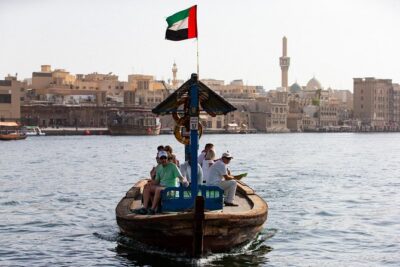
Dubai Half-Day City Tour with Visit to Dubai Gold Souk
Read our review →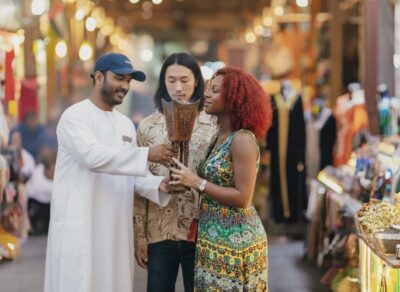
Old Town, Street Food, Creek, Souks, & Emirati House
Read our review →
Dubai City Tour: Old & New Dubai Abra Ride, Palm Island, Souks
Read our review →Browse the lists this tour appears in