
Reviewed · TOURS IN RAS AL KHAIMAH
Ras al-Khaimah: House Of Pearls Tour
Ras Al Khaimah’s pearling story comes alive on this short boat trip to Suwaidi Pearls. You’ll glide past mangroves, hear how Arabian pearl workers once lived, and watch a live oyster opening with only a 60 percent chance of finding a pearl. The oyster demonstration is the moment most people remember.
I like the old fishermen’s boat ride and the easy, personal style of guides such as Taqi, Obaid, Bilal, and Othman Alblooshi. I also like the simple setting, solar power, Arabic coffee, dates, and trader’s boxes. The main drawback is getting to Al Rams Marina yourself, since transport is not included and the location can be tricky to find on a first visit.
Key points to know before you book
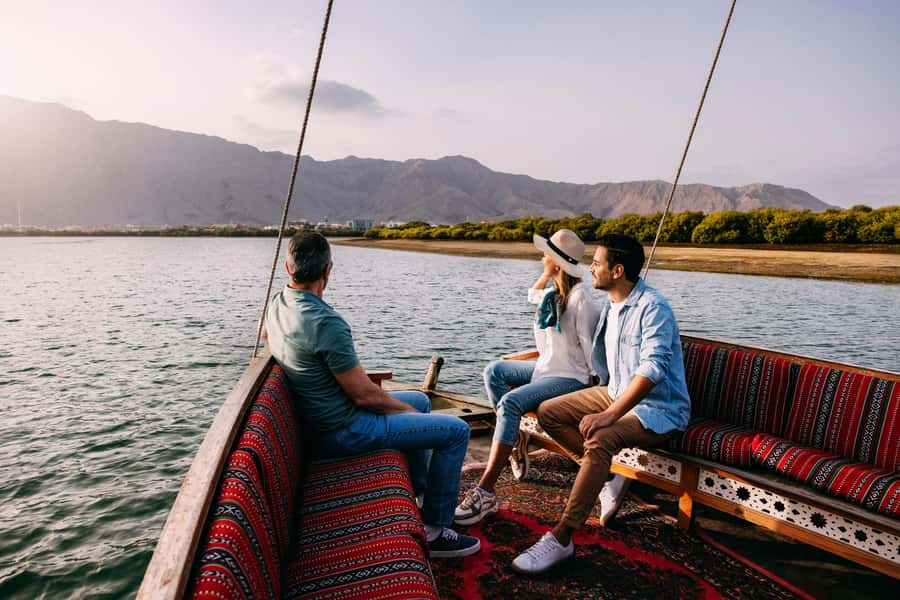
- A boat ride begins at Al Rams Marina, an old fishing village, and takes you through the mangroves near the pearl farm.
- The live oyster opening is included, but finding a pearl is not guaranteed. The stated chance is 60 percent.
- The storytelling is the heart of the tour, with guides explaining centuries of pearl work, trade, tools, and family traditions.
- The setting is deliberately simple, with solar panels, basic facilities, and an environmentally friendly marine system.
- Arabic snacks are included, including dates, tea, coffee, water, soft drinks, and light refreshments.
- A pearl purchase is optional, and finding one in an oyster costs AED 450 plus 5 percent.
Why this small pearl farm matters
Before oil changed the Gulf, pearling shaped coastal life across the region. In Ras Al Khaimah, the sea was not just scenery. It was a workplace, a source of income, and the center of a demanding way of life.
This tour gives you a clear introduction to that world without asking you to spend a full day in a museum. You travel by water from Al Rams Marina, visit a working pearl farm, and see the tools and objects connected with the trade.
I like that the experience connects several pieces of the story. You learn about natural Arabian pearls, see how cultured pearls are formed, and watch an oyster opened in front of you. That combination makes the subject easier to understand than a display of objects behind glass.
The tour also keeps the setting modest. Suwaidi Pearls is basic rather than polished, with solar panels supplying power and an emphasis on protecting the surrounding marine environment. If you want a large visitor center with air-conditioned galleries and glossy displays, this may feel too simple. If you value a small, hands-on cultural stop, the plain setting works well.
Other trips people book in Ras Al Khaimah:
- Ras Al Khaimah: Afternoon Desert Safari and BBQ Dinner
★ 4.4 · 558 reviews - Evening Desert Dune Bashing by 4*4 Vehicle
★ 4.6 · 270 reviews - Parasailing
★ 5.0 · 186 reviews
Starting at Al Rams Marina
Plan to arrive 15 minutes before departure. The meeting point is Suwaidi Pearls, at Al Rams Marina, known locally as an old fishermen’s village.
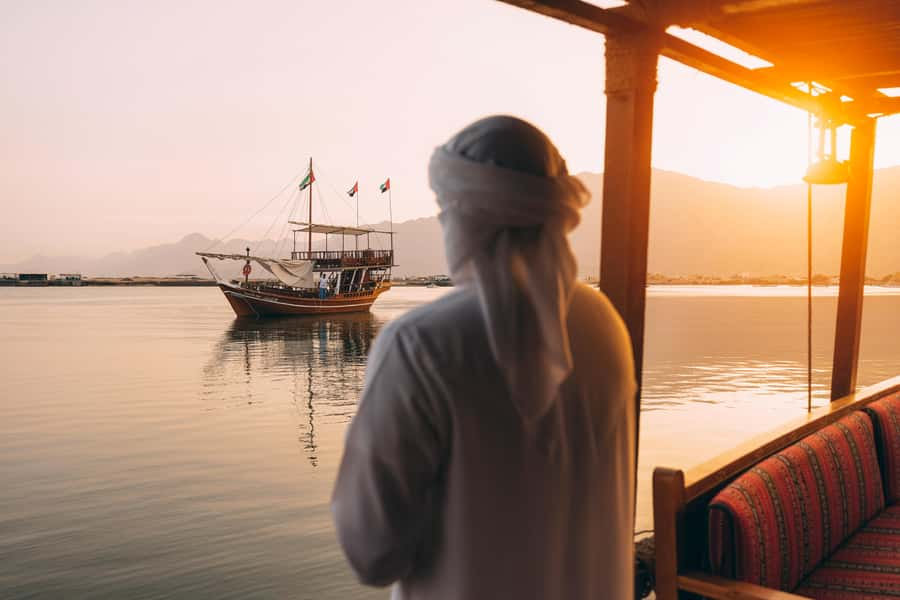
The marina is part of the appeal. You are not starting at a generic tour bus stop. You begin near the water and board a traditional pearl divers’ boat, which immediately gives the outing a local feel.
You must arrange your own way to the marina. This is the clearest practical weakness of the experience. Transportation is not included, and finding the place may take extra time if you are unfamiliar with northern Ras Al Khaimah. Leave room for wrong turns and do not plan to arrive at the last minute.
The activity is wheelchair accessible, but the exact boat and pontoon arrangements may still matter to you. If you have mobility concerns, confirm the practical details before booking.
A gentle boat ride through mangroves
The opening boat trip is short, calm, and scenic. You move around the mangroves near the House of Pearls and see the coastal setting that supports the farm.
Several details make this more than simple transport. You may see camels bathing in the sea, mountains in the background, and the mangrove channels close to the farm. The water is generally still, which is useful if you are prone to motion sickness. One afternoon departure also offers the chance to see sunset on the return journey.
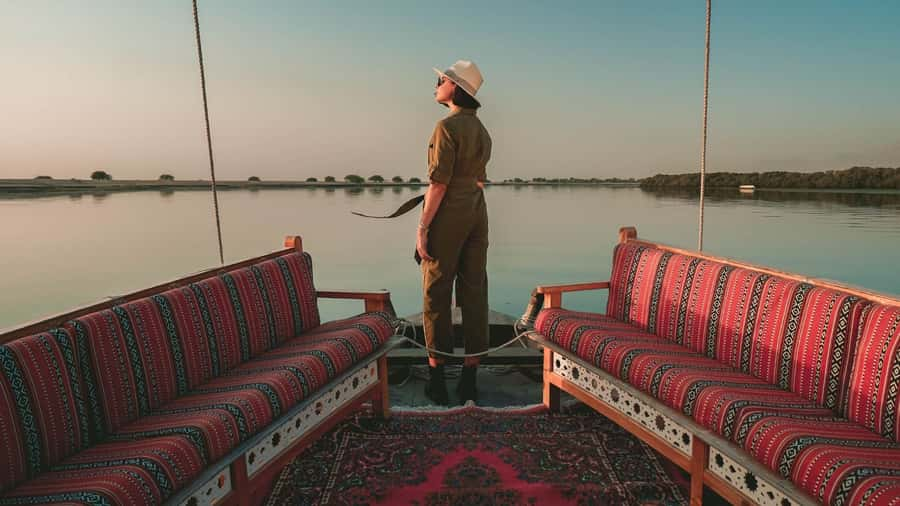
The boat is not a luxury yacht. That is part of its appeal. You are sitting in a traditional craft connected to the local fishing and pearl trade, not being carried to the site in a sealed vehicle.
Wear comfortable clothes and sunscreen. Insect repellent is a sensible addition around mangroves. Comfortable shoes are listed among the recommended items, though you may be asked to remove them when sitting on carpets, following local custom.
Stories of Arabian pearl workers
Once you reach the House of Pearls, the guide explains how Arabian pearls were collected, traded, and valued. The strongest part of the tour depends on the person leading it, and the named guides have different strengths.
Taqi has a lively way of handling mixed age groups and keeping children and adults involved. Obaid is known for clear explanations and an engaging presentation. Bilal offers a welcoming, well-organized tour, while Othman Alblooshi brings strong knowledge of pearl work and a warm storytelling style.
You will hear about the difficult life of pearl workers and see the tools used in the trade. The presentation covers traditional methods, the risks of working at sea, and the commercial side of pearls. It also explains how traders assessed and handled their stock.
This section is not a silent walk through a collection. Expect the guide to talk, answer questions, and use objects to explain the work. That makes the tour a good fit for families, especially since children can see equipment and participate in the oyster presentation rather than simply listen to dates and names.
The tour’s heritage value is strongest if you want to understand how ordinary coastal families earned a living before modern industries changed the Gulf. It is less suited to someone looking only for a scenic boat ride.
Same base, a different sort of day:
- RAK Desert Safari and BBQ Dinner with RAK pick up
★ 4.5 · 179 reviews - Ras al Khaimah: Jais Flight – World’s Longest Zipline Ticket
★ 4.8 · 110 reviews - Ras Al Khaimah: Half-Day Desert Safari with Dinner
★ 4.4 · 95 reviews - Dubai: Private Desert Day Tour and Wadi Shawka Pool Visit
★ 4.5 · 65 reviews
The science behind an Arabian pearl
The next part moves from old methods to the formation of oysters and pearls. You learn how natural pearls develop and how cultured pearls are produced through human care and scientific methods.
This distinction matters. Many people think every pearl begins the same way, but the guide explains the difference between a naturally formed pearl and one produced through cultivation. You also hear about the innovation behind modern pearl farming and the conditions needed to protect oysters.
The lesson is presented on the pontoon, where the setting keeps you close to the water and the farm itself. The subject can sound technical, but the live demonstration gives it a practical focus.
You should not expect a full scientific course. The tour is designed as a 2.5-hour cultural experience, not a specialist workshop. Still, the explanation adds value because you leave knowing more than the simple fact that pearls come from oysters.
The live oyster opening
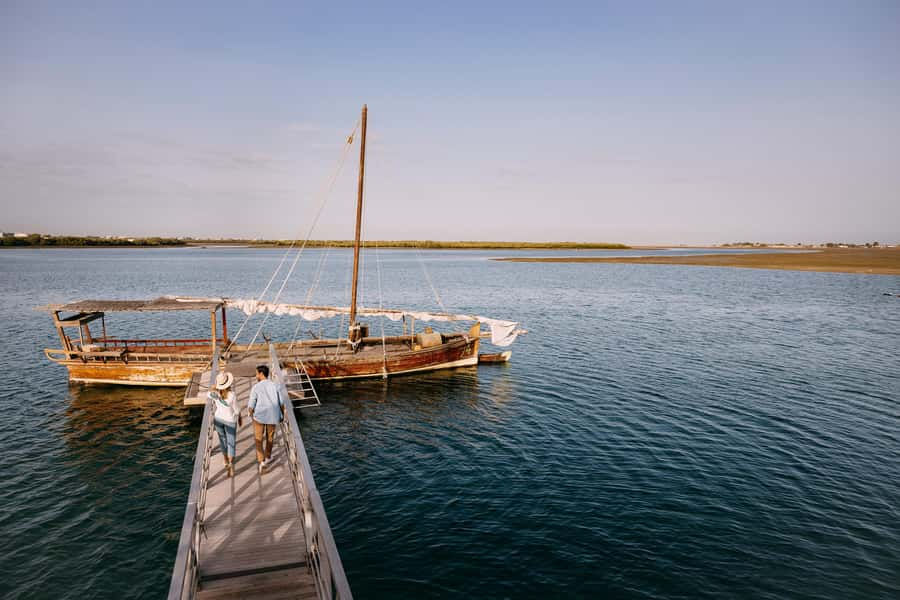
The live oyster opening is included in the admission price and is the most unusual part of the visit. The guide opens an oyster in front of you and explains what you are seeing.
There is a stated 60 percent chance of finding a pearl. That means you should treat the opening as a demonstration, not a guaranteed souvenir. The uncertainty is part of the fun, but it also sets expectations clearly.
If a pearl is found, you may take it for AED 450 plus 5 percent. Oysters and pearls are not included in the tour price, so this is an optional extra rather than an obligation.
The sales approach is reportedly light, which matters. You can enjoy the demonstration without feeling that you must buy something afterward. If you are interested in purchasing, ask about the options and costs before making a decision. If you are not, you can simply watch and continue with the tour.
Trader’s boxes, tools, and pearl collections
Inside the House of Pearls, you see collections of Arabian pearls along with the tools and treasures linked to their trade. One distinctive object is the traditional trader’s box called a Bish-Takh-Tah.
This part gives you a closer look at the commercial side of pearling. Pearls were not only found at sea. They had to be sorted, stored, transported, and sold. The boxes and instruments help explain that chain of work.
The collection is not huge, and the building is not designed like a major museum. That limits the amount of material on display, but it also keeps the visit focused. You can ask questions and examine the objects without being overwhelmed by rows of unrelated exhibits.
I find this section useful because it shows the difference between a pearl as a natural object and a pearl as a valuable item in a trading economy. The display also helps explain why size, shape, color, and luster mattered to buyers.
Arabic coffee, dates, and a simple farm setting
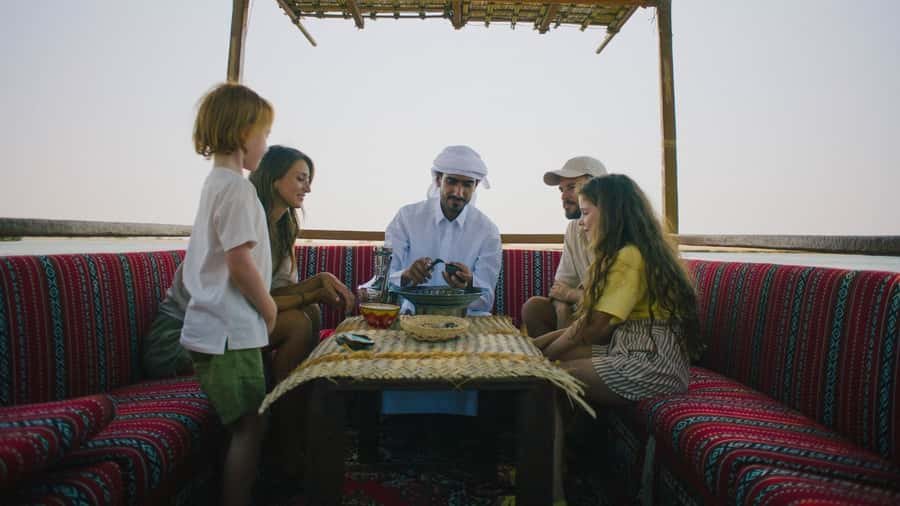
The included refreshments add a welcome local touch. You receive water, soft drinks, dates, light snacks, traditional Arabic tea, and coffee. You might also receive a small sweet during the boat ride or at the farm.
These are not a substitute for lunch, which is not included. Optional snacks or lunch may be available, but you should not book this as a full meal experience.
The farmhouse and outdoor areas are simple. Solar panels power the facility, and the operation follows an eco-friendly system intended to protect the marine environment. You have time to stroll around, enjoy the setting, and browse pearl jewelry or accessories.
Do not expect a resort-style farm. You may notice basic facilities and a little exposure to the heat. Bring sunscreen, wear modest light clothing, and use insect repellent if you are sensitive to mosquitoes.
Modest dress is requested. Avoid shorts, short skirts, sleeveless shirts, and clothing that does not fit local customs. Comfortable clothing is fine, but keep it respectful.
Timing, children, and the overall pace
The full experience lasts about 2.5 hours, including the boat ride, talks, demonstrations, and time at the farm. It is long enough to feel substantial but short enough to fit into a morning or afternoon in Ras Al Khaimah.
The calm water makes the activity suitable for many families. Children as young as five have enjoyed the boat trip and the practical parts of the visit, especially the oyster opening. Young children may lose interest during longer explanations, so a guide who keeps the presentation interactive makes a real difference.
A 3 p.m. departure can be appealing if you like softer light and the possibility of sunset during the return trip. Check the available start times when booking, since schedules may change.
Weather matters. The operator may cancel at short notice because of sudden weather changes or other unforeseen conditions. The boat and pontoon are central to the experience, so this is a real operational consideration rather than a minor footnote.
Is $57 good value?
At $57 per person, the tour is not the cheapest short activity in Ras Al Khaimah. I still think the price is fair if you value local culture, because it covers the boat ride, entrance, guide, refreshments, and live oyster opening.
You are paying for access to a working pearl farm and for a guide who can connect history, science, and local tradition. The price also includes more than a museum ticket. You spend time on the water, see the mangroves, and visit the farmhouse.
The value is weaker if you mainly want a long cruise or a guaranteed pearl. The boat ride is part of a wider program, not the whole point, and a pearl purchase costs extra. Lunch is also separate.
For families, couples, and curious visitors who have already seen the major city sights, the tour fills a useful gap. It shows a side of the UAE that is easy to miss when a trip focuses only on modern buildings, shopping centers, and desert activities.
Who should book the House of Pearls?
I would choose this tour if you want:
- A short cultural outing from Ras Al Khaimah
- A traditional boat ride through mangrove surroundings
- A clear introduction to pearl work and pearl farming
- A hands-on demonstration rather than a standard museum visit
- An activity that can work for adults and school-age children
- A simple, environmentally minded setting
- A guide-led experience in English or Arabic
I would think twice if you dislike outdoor heat, need a full meal included, or expect luxury facilities. The location also requires careful planning because there is no included hotel transport.
The tour is especially useful early in your visit, since it gives you context for the region’s older coastal economy. It can also make a good change of pace after a day spent among modern attractions.
Final decision: book it or skip it?
Book the House of Pearls if you want an authentic, compact look at Ras Al Khaimah’s pearling tradition. The boat trip, mangroves, strong storytelling, and live oyster opening give the experience enough variety to justify the two and a half hours.
Go with realistic expectations. This is a basic farm, not a polished theme attraction. You must find your own way to Al Rams Marina, follow a modest dress code, and pay separately if you choose to keep a pearl.
For most people interested in local culture, the balance is good. You leave with a better understanding of how pearls shaped coastal life, plus a memorable boat ride and the small thrill of seeing an oyster opened in real time.
FAQ
Where does the House of Pearls tour start?
The tour starts at Suwaidi Pearls at Al Rams Marina, an old fishermen’s village in Ras Al Khaimah. You should arrive 15 minutes before the activity begins.
How long does the tour last?
The experience lasts approximately 2.5 hours, including the boat trip, guided tour, explanations, and live oyster opening.
Is transportation from my hotel included?
No. Transportation to Al Rams Marina is not included, so you need to arrange your own way to the meeting point.
What refreshments are included?
The tour includes light snacks, water, soft drinks, dates, traditional Arabic tea, and Arabic coffee. Lunch is not included.
Can I keep a pearl if one is found?
Yes. If the oyster opening produces a pearl, you may take it for AED 450 plus 5 percent. Oysters and pearls are not included in the tour price.
What languages are available?
Guided tours are available in English and Arabic.
What should I wear and bring?
Wear modest, comfortable clothing and comfortable shoes. Bring sunscreen and insect repellent, and carry a passport or ID card. Shorts, short skirts, sleeveless shirts, pets, and baby strollers are not allowed.
Just added in Ras Al Khaimah
- Ras Al Khaimah: Scenic Microlight Adventure Over Desert★ 4.9 · 14 reviews
- Ras al-Khaimah: Jais Sky Tour Zipline Adventure★ 4.7 · 36 reviews
- Ras Al Khaimah: Half-Day Desert Safari with Dinner★ 4.4 · 95 reviews
- Ras al Khaimah: Jais Flight – World’s Longest Zipline Ticket★ 4.8 · 110 reviews
- From Ras al Khaimah: Musandam Khasab Day Trip with Transfer★ 4.7 · 34 reviews
- Ras Al Khaimah: Guided Quad Bike Tour★ 4.6 · 35 reviews
- Morning Desert Safari in Ras Al Khaimah★ 4.0 · 19 reviews
- Khasab: Private City Tour and Wadi Qadah★ 4.9 · 8 reviews
Tours in Ras Al Khaimah, compared.
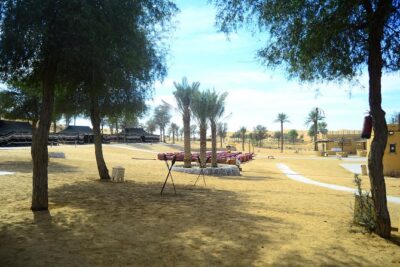


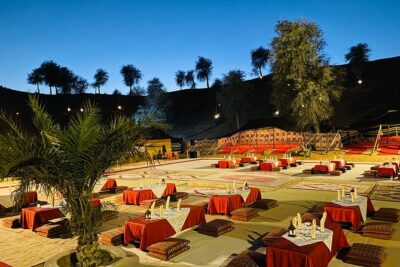
RAK Desert Safari and BBQ Dinner with RAK pick up
Read our review →

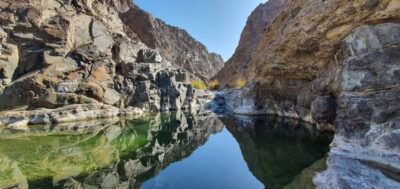
Private Desert Day Tour and Wadi Shawka Pool Visit
Read our review →
Browse the lists this tour appears in